Above her, creaking floor-planks sag under the weight of armed men, their booted feet thumping as they march into the house. Every time one of them steps over the narrow gap between the planks, they block the ray of light that slithers into the cellar where she hides, the cellar where Mamma keeps the oils for her paints under the kitchen floor. Carefully, she peeks through the gaps and tries to count the men: one, two, three, four, five, six… How many are up there? Why are they here?
Moyse feared that soldiers might come for him and his father just as they did in other towns. His people are not wanted in France, Moyse said, and it may soon be like Spain, where they burn his people alive even if they convert. Moyse hides in the cellar with her. She can hear his breath, quickened and trembling, close behind her, and reaches for his hand to reassure him, but freezes midway. Above her head, where the creaking planks sag under the weight of thumping booted feet, the men are barking: “Where’s the Venetian whore?” They are all Venetian in her family. What do these men want? What is a whore?
“How dare you, Monsieur! This is a decent house. A noble family,” Papa protests courageously and there is not a hint of quiver in his voice. It occurs to her for the first time that he never faltered. Then, the planks shake violently, and she knows that they have shoved Papa onto the floor and kick him with their booted feet and beat him with their fists and the butts of their pistols. She can hear Papa moaning and with a hoarse, rasping voice, valiantly insisting on the nobility of their house, but the men laugh and keep barking, “where is the Venetian whore?” and she knows it is Mamma they mean and that soon they will find Mamma and drag her into the kitchen where Papa lies in a pool of blood, next to the Cook, Madame Fromont, whose throat they slit before she could call out for help. “Where are the paintings, bitch? Every one of them. The drawings too!” they will keep yelling and barking orders. “Search every corner. Burn every drawing and paper you find!” She knows that they will find nothing, and Mamma will say “tell your master I am not afraid of his bullies and his henchmen. Tell him it’s too late,” and they will curse–unspeakable words–and that is when she decides that she will hide under the sagging planks no longer, but push open the trapdoor to the back of the kitchen and there she will see Papa hanged from the roof-beams and Mamma— Mamma she could not see clearly, only her familiar figure held face-down on the kitchen table by men with fathomless eyes. Then, she will hear Mamma screaming “Run, Sandretta! Run!” and Moyse will seize her hand…
She has lost all sense of time.
She knew something was wrong with the first jolt of the carriage, and even though they had not yet left Bragelonne. She told herself the baby would be safe as long as she kept her wits about her. It is what she tells herself still, when her mind stops wandering. She reached for her pistol and fired. They were surrounded. Masked horsemen, threatening and swearing. There were bullets. Hers. Theirs. The next thing she remembers is Comminge’s snarling face inside the carriage and blood everywhere, whose blood she does not know.
“You will never have her. She is not here, and she is well protected.” She spat the words at Comminge’s snarling face and that was the only moment she was grateful for Athos’ anger. Grateful he took Bianca away to a place she doesn’t know, so Comminges and his master, Rochefort, will never find out, no matter what they do to her.
“That greeneyed spawn, your daughter, you mean?” Comminges mocked. “We are not here for the wench. We are here for you.”
That, she did not expect but it did not rattle her. Life taught her to have few expectations besides what she could do for herself. Carefully, she slid her hand inside the folds of her skirt. She could easily slit his throat, take his pistol, keep the baby safe.
“Murdering, Venetian whore!”
In a split second she would have sliced his snarling face, but in that split second he was untouched, and wrestling the dagger from her hand, pinning her into the carriage seat, his elbow pushing against her throat, suffocating her.
“Take my hand, Sandretta!”
The boy smiles and offers her his hand. “It’s not easy to walk in the sand, so we will walk together.” He is not a boy who smiles often, because he is Old and Serious. That’s what his younger brother says to tease him, calls him “Old Man” too, although he is but a year older. Mamma thinks him a loving, tender-hearted boy. He is too burdened for one so very young, she tells Papa. Gentle Sage she calls him, and his younger brother, she calls Sweet Mischief. Gentle Sage does not smile often but when he does, gold flecks dance in his gray eyes. This early morning his eyes catch something of the golden light that flickers on the rippled expanse of the sea, which stretches along this quiet cove. They play here, the three children, while Madame–the mother of the boys–and Mamma follow close behind, talking and laughing. They are good friends. As close as friends can be.
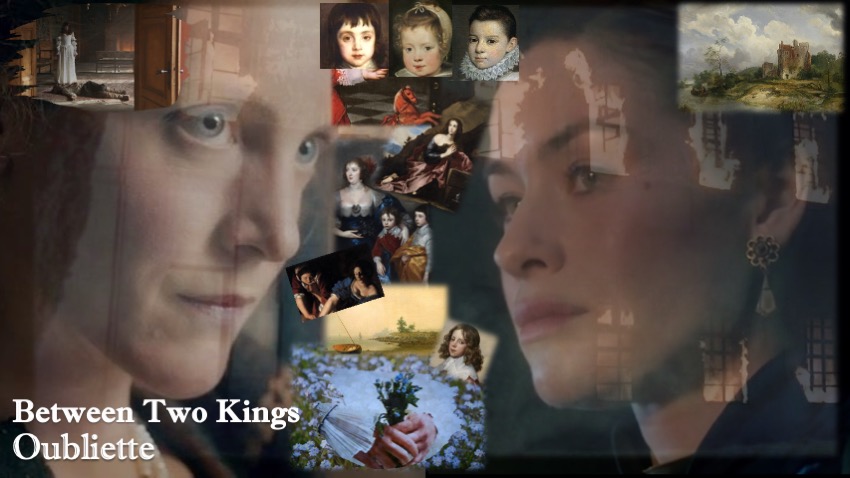
“She is a little girl. You cannot let her stumble and fall, Old Man!” Sweet Mischief teases, and his large hazel eyes glow playfully as he winks at her. Sweet Mischief likes to tease her, but she forgives him immediately because he kisses her cheek and calls her “Little Sister”, although they are the same age and he is not her brother, and because there is no toy or book he will not share with her, even his favorite toy horse, the one he keeps in his hands as he prances around them on the sandy shore, the one Mamma painted for him, gold with a red saddle and trimmings. Xanthus, Sweet Mischief calls his toy horse, after one of Achilles’ immortal horses.
“Don’t go too close to the water!” Madame cautions hurrying behind them with Mamma. In the mornings, on this glowing shore, they all become children, Madame and Mamma too, skipping stones, collecting shells, building sandcastles and deep ravines for Xanthus’ adventures. When they return, on the days when Mamma paints for Madame, they stay with Madame’s small family at her house by the sea, and, in the evenings, Papa reads to them the stories of Aeneas. Gentle Sage sits next to her always and sometimes, when her eyes are too heavy with sleep and Papa’s stories are too long, she rests her head on his shoulder, and he wraps his arm around her. He does not mind that she falls asleep like this. These days are the happiest, even if they may never have happened this way. Even if they are nothing but a figment of her wandering mind.
She has lost all sense of time.
They were far from Bragelonne, that much she reckoned, although she could not tell where. A forested road. Comminges and his men must have kept her tied in the saddle of someone’s horse, because there was no longer a carriage and, next, she was being dragged from a saddle to the ground, her hands tied behind her back, her feet tied too, her head pounding and her mind confused. An icy wind was blowing, wet wind, the kind that blows near water, when a blizzard is about to break, and the ground was frozen solid. She told herself the cold was not bad, and helped with the pounding in her head, keeping her mind from drifting. “Give her some water,” someone said and someone else loosened the rope around her wrists so she could drink. She could not see their faces clearly. Even the pale light creeping between the branches made the pounding in her head worse and her stomach rose to her throat. She was not thirsty, and the cold water dropped like a heavy weight. She heaved and they pulled away in disgust.
“What is wrong with her?” one of them grunted. Comminges and his men had no patience for such shenanigans.
“Maybe she’s got the plague,” another scoffed. They laughed and moved away, drinking, eating, taking a piss, or whatever it is men do, while waiting for their horses to cool down, and she felt it then, the loosened rope. In their disgust they had failed to tie her hands again, so she carefully untied her feet too, and there she was, bolting blindly into a gray, barren forest, the frozen ground hard, uneven and treacherous, covered with thin ice. Every so often, mingled with the bitter gusts that howled through the frosted tree trunks and the writhing limbs, she could hear the voices of Comminges’ men yelling, the pounding of horse-hooves, and pistols shooting. From instinct she knew that as long as she kept into the densest part of this forest, horses and pistols afforded them little advantage. The falling darkness and the coming blizzard, she thought them a godsend, and cared for nothing else, not the cold, not her pounding head and her stomach that kept rising to her throat, not the treacherous ground, not the bear and the wolf and the wild boar. Soon she could hear Comminges and his men no longer, but she kept running as fast as her aching, stumbling feet could carry her stopping only to catch her breath, and whenever her stomach rose to her throat. The blizzard hit hard, and she found herself pushing against it along a deserted country road. She told herself she was safest in the forest, but night was falling and in the dusk, between gusts of blinding snow, she had seen the shape of a crumbling barn, with two of its walls and some of its roof still standing. She stepped inside and her knees gave away. She stepped inside and found the muzzle of a pistol aimed at her head.
“Shoot,” she dared the man.
“Enough!” Comminges ordered, and his man holding the pistol withdrew. “Thought you could escape?” Comminges sneered, dragging her to her feet. She was not rattled. She had tried and failed. She’d have to try again.
This time she was tied in the saddle behind Comminges, and they did not ride far. It was too dark, and the blizzard had gotten stronger. The place was not too different from the crumbling barn, she thought. It had the semblance of a roof and four more or less intact walls and a door that closed. Some wretched inn. They did not bring her inside, but tied her next to the horses under the thatched shed that served as stables. She was drenched, her dress heavy with snow, her hair frozen stiff. She could feel the cold to her bones, her hands and feet numbed from the cold and the tightened rope. Some woman from the inn offered a threadbare blanket, but the men pushed the woman aside. “Let her see what happens if she tries another one of her tricks,” they growled. “Don’t go near her,” they threatened the woman, “she is a witch. Look at her eyes. Like a cat, she has many lives.”
She kept as close to the horses as the rope allowed. There was little else for warmth or to protect against the freezing wind. She told herself the cold helped to keep her mind focused, even if she could no longer feel her fingers and toes. She wondered what they wanted with her, but this was Comminges and his brutes. Perhaps all they wanted from her was revenge. To keep the baby safe was more important than whatever Comminges wanted. Then, she was cold no longer, but enveloped in bright morning light.
“No, not these, my love,” Mamma says. “These are forget-me-nots. Not the kind of flower I was looking for.”
She stands in a sea of small, delicate flowers, rising off the ground like a blue-colored mist. Such a pretty name too, forget-me-nots. She can never forget it. Mamma squats next to her, and stretches out her hand almost touching the delicate, blue-colored blooms. “Such color,” she marvels, speaking to herself.
“Why not, Mamma?”
“Why not indeed?” Mamma chuckles. “I was thinking about lilies, but you are right, why not the forget-me-not, so humble, yet glorious in its ephemeral beauty? Like the lily, it too signifies faithful and enduring love, but speaks of much more. It speaks of the dead, of loss and pain. Some call it the scorpion flower. Do not be deceived by that which looks delicate, the forget-me-not warns us. Love, which often seems fragile, can be enduring, but can also carry a deadly sting.” Mamma pulls her closer and whispers in her ear: “If one is very lucky, my Sandretta, they find true, enduring love in another. I have been so blessed and pray you will be just as blessed, my precious girl. But like this delicate mist before us, love can prove elusive, mired with loss and pain. That is why we must always be strong. The forget-me-not and the scorpion flower are one and the same.”
They will pick none of the forget-me-nots this morning, but Mamma will return with Madame and with her easel and all her paints the next day, much earlier, when the fine pedals are glowing from the morning dew, and the air is fresh and warm.
She has lost all sense of time.
She was shoved onto a dirty earthen floor, and covered with a rough, tattered blanket that reeked of mold. There was commotion around her, shuffling feet, voices, mud, and dust. “I pay you to deliver her alive!” someone was barking, and after a moment, she knew who he was: Harry. It was at the same moment that she realized she was shivering so hard that her teeth rattled. Someone pushed her mouth open and poured a tepid liquid that burned down her throat, turning her stomach once more. She gasped, a fit of cough suffocating her. She could hear them laugh: “the cold-hearted bitch is thawing,” someone scoffed. “Who wants to take a bet, she has more lives left in her?” another joked, and then Harry–it was Harry– growled: “ ‘s blood, we are not here to drink and gamble and be merry. I pay all you wretches my good money to get her where she is supposed to be in one piece.”
This time they tied her hands and feet and threw her on a wagon. It was covered and there were barrels and stacked sacks keeping her warm although she was shivering still—a strange shiver coming from within— and could no longer see, fog rising before her eyes, in her mind too, making it difficult to focus on one thing. The baby, she thought, and then she remembered Harry’s words about “his good money”. This wasn’t Rochefort.
“Is this the little one?”
The man leans closer from his saddle as he speaks. “The lovely Sandretta that my son talks about. She is very precious indeed. Very precious.”
She does not like how he hisses the word “precious”, as if he means the exact opposite. His eyes too, she does not like. Later, when she will learn about scorn, she will understand what was distasteful about the man’s tone and eyes. “Your Grace” Papa calls the man on the horse, although the man does not reciprocate, as he must. He keeps to his horse, while they stand at the side of the road, the three of them returning to Madame’s house, from the fishing village nearby. Madame and the boys never walk there, but Papa and Mamma like to stroll down the pier, talking to the fishermen. They are good people, Papa says. Unlike the man on the horse, she thinks.
“A portrait,” the man is saying. “The boy is patient and well-mannered.” He tilts his head toward his companion, riding next to him on a bay horse: a tall boy, fair-haired, older than Gentle Sage and Sweet Mischief. “I pay a handsome fee,” the man insists, but Mamma does not seem eager.
“I see you with my spyglass every time you are at the cove. My father’s estate reaches the promontory overlooking that shore. Sandretta, is this not your name?” The tall boy has jumped from his saddle. He bows, the way cavaliers bow to ladies. No one has ever bowed to her this way before. “An unusual name, for an unusual beauty.” She has no idea what he means, but refuses to smile, although she suspects that she should. She does not like that he follows her with a spyglass when they play. “And your mother is a famous painter. Your father a well-known scholar–I have his books. Have read them all.” She does not like the way he says this too, as if they are, all three of them, odd creatures to be dissected. There is something distant in his pale blue eyes, cold, no flecks of tender light in them nor playful mischief, no life in them, she thinks. “Father wants a portrait of me, for my grandmother in Madrid. My grandmother is a duchess, and I am soon to join the court in Paris.”
“There are other means of persuasion, Madame, if money is not inducement enough,” the boy’s father hisses from his horse, and turning to his son, he barks: “on your horse boy! Did you ask permission to dismount and have a conversation? You will be disciplined as you deserve.”
The boy’s face stiffens, and at that moment she feels sorry for him, sorry that he must ask permission even to speak to another. “Maybe if you ask permission, you can join us at the cove?” she ventures.
“You are such an ignorant child,” the boy sneers, “and if your parents had any sense of decency they’d act accordingly. But, of course, everyone here knows the truth about your parents.” He leans closer before jumping into his saddle, his voice dripping with disgust: “Me? Join them? Those two filthy bastards?”
That night she pretends to sleep but cannot. What is the truth about Papa and Mamma everyone here knows? How could her two most beloved friends be filthy and disgusting? What is a bastard?
In the room adjacent to their bedchamber, where Mamma paints for Madame, she can hear someone pacing. Papa and Mamma are there, speaking in whispers. She sits up in her cot and listens carefully, silencing her own breathing, striving to distinguish words, anything to help her understand. Eavesdropping is a bad thing Mamma says, but the boy’s cruel words weigh heavily in her heart.
“It is only a portrait, Bianca,” Papa is saying. “If he means his threat, and I believe he does, you don’t have a choice.”
She has lost all sense of time.
They untied her–this she remembers– and pushed her into this dungeon bolting the door, and she was in complete darkness, thick, dense darkness, not like that other dungeon in Rouen. Whatever it is she steps on is slippery and makes cracking sounds and there is movement all around her, scuffling, and the unmistakable squeaking of rats. It rattles her enough that her legs give away, and there she remains, crouched with her back against the bolted door, covering herself as best as she can with the threadbare, molding blanket from the crumbling inn, trying to touch nothing, to be touched by nothing. They will come for me is all she can think. She has heard stories about the fate of poor wretches locked in the dungeons of the Bastille and the oubliettes of the Conciergerie. How every sound becomes an enemy and every movement a threat. How terror and darkness eat away the mind while rats eat away the body. How sleep means death.
She refuses to let herself die like this. Let her baby die. She wraps her arms around her stomach and whispers, “we will find a way, love. You and I together. Harry will not win.” She keeps her mind occupied piecing together how she got to this dismal place, trying to make sense of where she is. If it’s Harry’s doing, is this England? And when her mind starts to wander, as is inevitable, she does not rein it in. Whether it is memories her mind recalls or whether it conjures up stories from fragments–things she has only wished for, things she has forgotten, things she never wrote down for Bianca to read, things she never wanted to remember—they distract her from sleep and all that lurks in the darkness.
How long it has been since she was brought here, she does not know exactly. It is not easy to count time in this place. A week? A fortnight? Ever so often someone slides a piece of stale bread and a mug of water through a narrow opening at the door. She drinks the water immediately, but the bread is her only weapon against her scuffling enemies. She throws it as far from her as she can and lets her enemies feast on something else, as far from her as possible.
Sometimes, when her eyes grow heavy, as is inevitable, she finds herself in the bright, well-aired corridor of an old, stone-built house. Sometimes it looks like her house in Venice. Sometimes it is a place she does not recognize, although it feels familiar. A place by the sea. Safe. There is a door at the other end, and she must reach it, for she is expected, but she always jolts herself out of the slumber before she opens that door, some movement or a loud squeal stirring her back to the dismal darkness.
This time the squealing sound comes from the bolted door opening. Light floods the cell and a gust of air, musty and cold. The air makes her cough and the light is painful, so painful she covers her eyes with her hands, and when that fails, with the rotting blanket.
“Well, look at that! The murdering whore crawling with the rats and the vermin, as she deserves,” someone sneers. She does not recognize the voice. It is not Harry’s.
“Shut up, Thomas! What the hell is this place? What the hell is this?”
This is a voice she recognizes. It reeks more than anything in this dungeon. It reeks of resentment, malice, and cruelty.
“Catherine…” She barely recognizes her own voice. Hoarse. Whispering. A fit of coughing follows. She is no longer used to talking as she is no longer used to light.
“Yes, Catherine, you murdering whore! Catherine! You did not think it was possible?”
“Anything is possible for one as sad and bitter as you.” Another fit of coughing follows. It hurts to speak, so she must choose her words carefully.
“Why is she in this state, Thomas? Whose brilliant idea was to keep her like this? Get her cleaned up. I want her walking to the scaffold on her own two feet. I want her to see and feel the punishment she has evaded for years. No executioner will agree to hang a corpse.”
“You may want to hurry with that plan, Catherine, or this corpse will beat you and your executioner to it.”
Someone’s booted foot lands a kick into her ribs, maybe the son, Thomas, and she is back in that house by the sea, walking down the corridor where she is expected, the bright light no longer painful. This time, finally, she reaches the corridor’s end and opens the door. It is a room, like her mother’s workshop in Venice, only larger, with few furnishings, and two large windows with a view of the sea on a summer day. She can smell the breeze, salty and fresh. A girl is seated by the window, and although she has never seen the girl before her heart leaps with joy.
“My dearest, sweetest love.”
She gasps as the girl turns. Beautiful eyes, gray like her father’s, her hair brown like his, and sun-kissed. The girl smiles and gold flecks glimmer in her eyes.
“My darling girl!”
“Don’t worry, Mother. We wait here,” Francesca says. She is not alone. A boy is seated on her lap. He is very little, younger than Bianca, rosy-cheeked and freckled, with large green eyes and a wild mane of bright red curls, just like Papa’s. “This is my brother,” Francesca says, “This is Leon. Don’t worry. I keep him safe.”

 Twelve Years After