Royaumont Abbey is approximately 30 km from Paris, less than a day’s ride away by horse. It is an ancient Cistercian Abbey, founded in 1228 by King Louis IX, better known as Saint Louis. The Abbey buildings are arranged around a beautiful cloister and garden, the galleries of which served the work and prayer places of the monks who lived there. The monastery dimensions are a reminder of its royal origins. The architecture of the Abbey was remarkable, characterized by ribbed vaults, slender buttresses and majestic stained-glass windows, all of which bear witness to the refinement of Gothic art. The secluded lake-side setting is in keeping with the tenants Cistercian practices of contemplation, scholarship and manual labor in working the land. The Cistercian monks lived an austere life, farmed the land, and considered education and scholarship to be important.
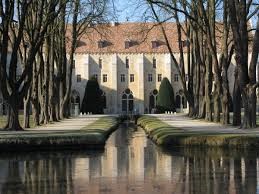
For readers who remember Lucien and Layla’s venture in Ireland, it was an Irish Cistercian order who created a false map of the coast of Ireland to fool invaders. Lucien took this idea to deceive his enemies, creating a false map of the coastline where he and Jacky Azoulay hid their sugar cargo and enabling them to get their valuable cargo to Amsterdam. Lucien’s son Gabriel stole the false map believing it was a true map and got into serious trouble with his masters.
The Abbey is within the valley of the Oise River, surrounded by fertile plains and extensive woodland forests. In our story, a young Lucien Grimaud roamed these forests. There are sandy heaths and fragrant pine forests, majestic beech and oak forests. In past centuries avenues were laid out for the horse-riders in royal hunts. The Abbey prospered during the Middle Ages, becoming a center of culture, prayer and learning. It had a renowned library and housed many precious manuscripts. Royaumont Abbey was frequented by important political authorities, its proximity to Paris made it a favorite retreat for King Louis XIII and Cardinal Richelieu. The Abbey was occupied up to the time of the French Revolution during which the church was destroyed, but the other Abbey buildings survived. It is today a popular tourist attraction.
In our story, we have included nuns living at Royaumont Abbey, which in history did not occur until later. But as in the historical account, the monks and nuns in our story work the fields. There is no historical record of Royaumont serving as an orphanage, but it is likely that the Abbey would aid orphans in the local area. In our story the enterprising nuns and monks of Royaumont Abbey take in orphan children, encourage them to work in their gardens and educate them. The de la Croix family lives near the Abbey in their ancestral home by the same name, Royaumont. Over many generations the family maintained its privileged relationship with the Abbey through church functions and ceremonies, general wellbeing of the local people, charities, festivals and village events, and local conflict resolutions.
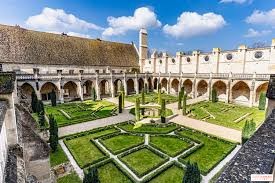
The surname La Croix was first found in Languedoc, dating back to early Medieval times. Languedoc, a region in southern ancient France, has been a wine producing region since before Roman times. It was described by travelers as plains covered with wheat and hills with olive trees, sainfoin, pastures, vines and mulberry trees. The illustrious La Croix family distinguished themselves in military service and in recognition of many heroic deeds, the family was granted lands, titles, and letters of patent confirming their nobility. The family prospered and members served in royal courts, held important ministerial positions and military officers. With strong religious convictions, family members also found success within the Catholic church. The family expanded and branched out to other parts of France, European countries, Canada and later into the Americas.
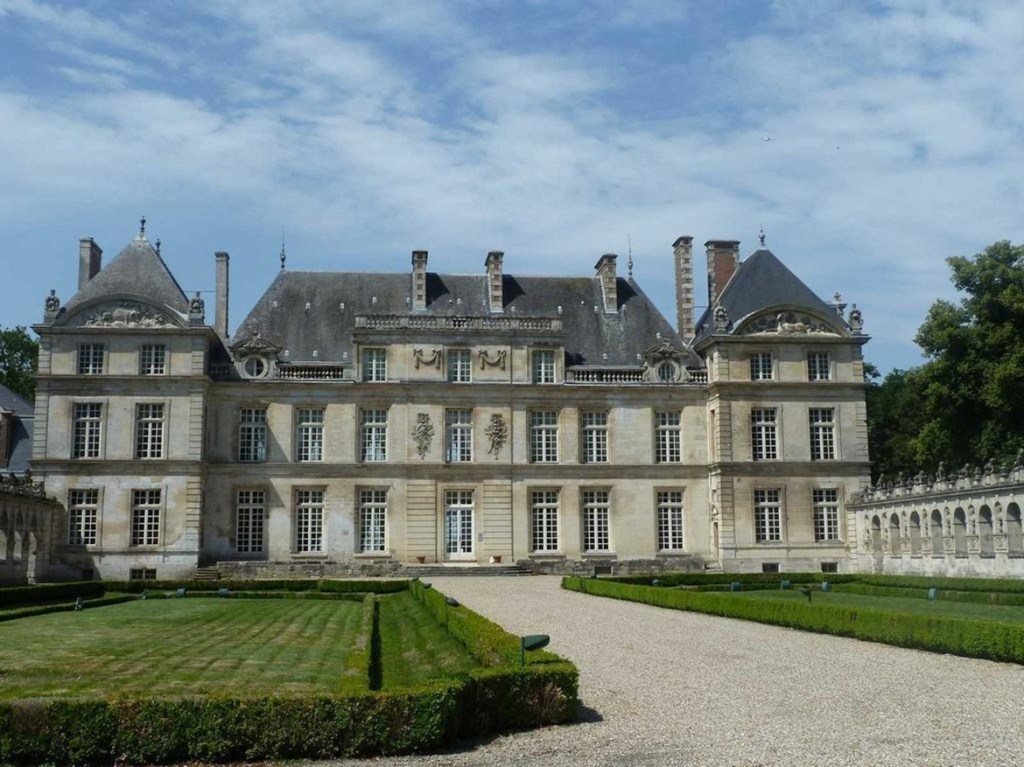
Chateaude Re Ray (above) and Chateau Chantilly
The members of the de la Croix family in our story are composites based on what can be known about certain family members. Sophia de la Croix was born, raised and now lives with her family on an ancestral estate, once an important fortification against invasion. The Royaumont estate is fictitious. It is based on several large estates with a chateau and ancient fortifications. The land is farmed by tenant farmers as was the common practice of the time and who hand down their farms to their sons, creating generational families of farmers and villagers who interact with the de la Croix family. We have also included a few farmers who own their own land in the region, which was rare, but not unknown.

 Twelve Years After
One thought on “Royaumont Abbey and de la Croix estate”