As we explain with a different post, Dumas’ Three Musketeers is based on a romance, a pseudo-memoir about the historical d’ Artagnan—Charles de Batz de Castlemore d’ Artagnan—written by an almost contemporary of his, Gatien Courtliz de Sandras.
It was Dumas, however, who fleshed out, and “gave life” to the “Four Inseparables”, the “Three Musketeers” (Athos, Porthos, Aramis) and d’ Artagnan. At the same time, these characters had historical counterparts. The three historical musketeers are not as well documented as Charles de Batz de Castlemore, Comte d’ Artagnan. However, each deserves a separate post–the fictionalized musketeers, Athos, Porthos, and Aramis, and their historical counterparts: Armand de Sillègue d’ Athos d’ Autevielle, Isaac de Portau, and Henri d’ Aramitz. We begin with Athos.
Like Charles de Batz, the three historical musketeers were minor gentry and all three were Béarnais. Courtliz de Sandras calls them “brothers” although they were not brothers, but might have been related to each other and to Monsieur de Tréville in some manner. Perhaps it comes as a disappointing surprise that there is no historical evidence that these four men were close friends or that all four actually met. Like their commanding officer, M. de Tréville, at some point in their lives, all of them belonged to the Gascon Cadets, so perhaps they could have been acquainted. But the strong friendship, the brotherhood–this essential element of the Musketeer Saga–is fiction.
The Gascon Cadets was not just a regiment. It was an identity, and legendary, especially since the accession to the French throne of King Henry IV, who was a Gascon himself. The name of the regiment carried a significant sense of pride and camaraderie. Gascon Cadets were usually poor, adopted noms de guerre, and were fiercely proud of their lineage, no matter how questionable that lineage was in the eyes of northern French aristocracy.
Historical Athos
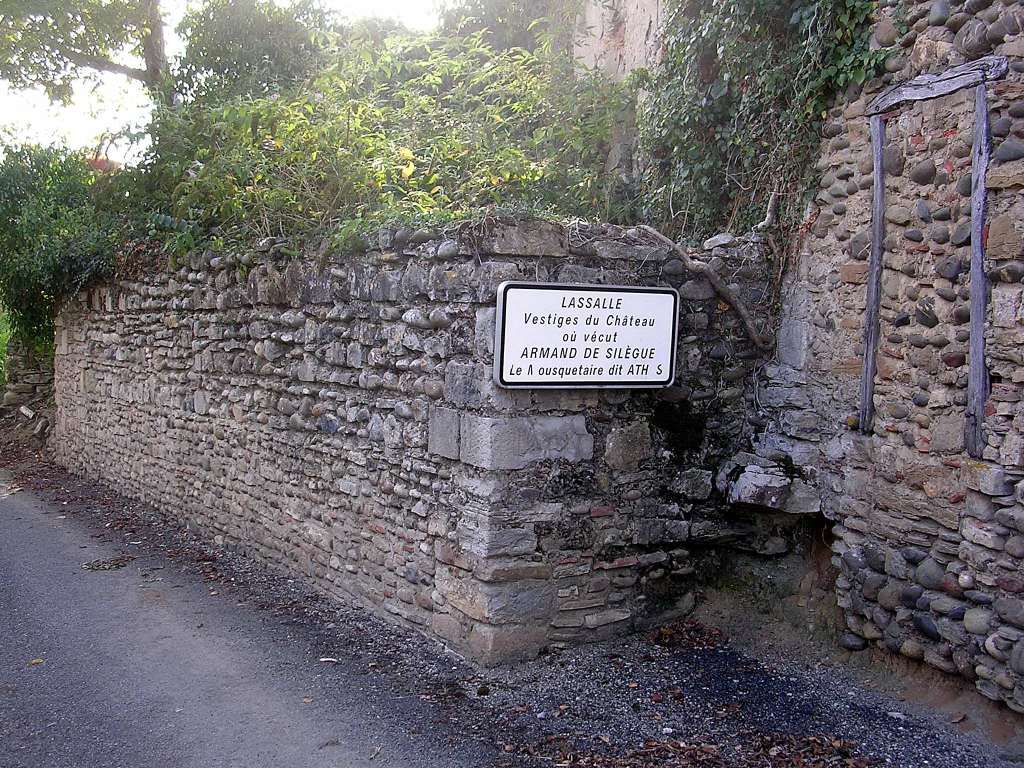
remains of the chateau at athos-Aspis
Athos, or Armand de Sillègue d’ Athos d’ Autevielle (1615?-1643), is the lesser known of the three historical counterparts of the fictional musketeers. Sources about him are few, conflicting, and sometimes downright incorrect. He died a violent death of some sort, in Paris, on December 21, 1643 probably before the age of thirty.
Armand was a Gascon, rather, a Béarnais like d’ Artagnan and M. de Tréville who was his relative. The village from which his name derives, Athos-Aspis was close to the fortified town Sauvette-de-Béarn. It was smaller than Lupiac, d’ Artagnan’s hometown, and smaller than the village of Aramitz, and Porthos’ village of Lanne. Athos-Aspis was neither the family’s primary holding nor their largest, but it is the holding that remains connected to their name, because of how the historical man was later fictionalized. However, in Dumas, the name “Athos” is a nom de guerre and it is not derived from the location of any French estate but from a mountain at the NE corner of the Balkan peninsula on the Aegean sea that is occupied by an isolated monastic community that shuns females (Mt. Athos or Hagion Oros or The Garden of Mary).
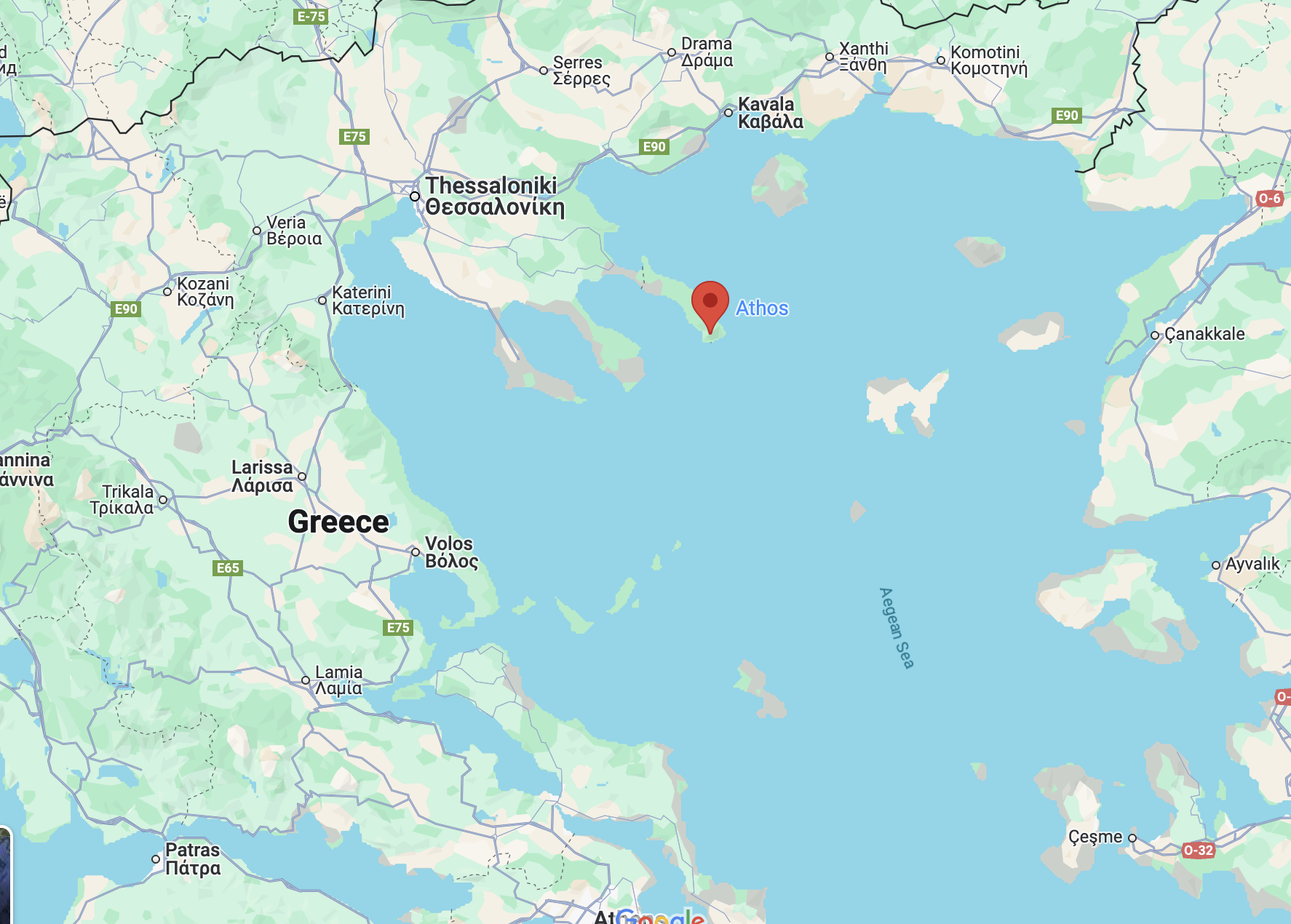
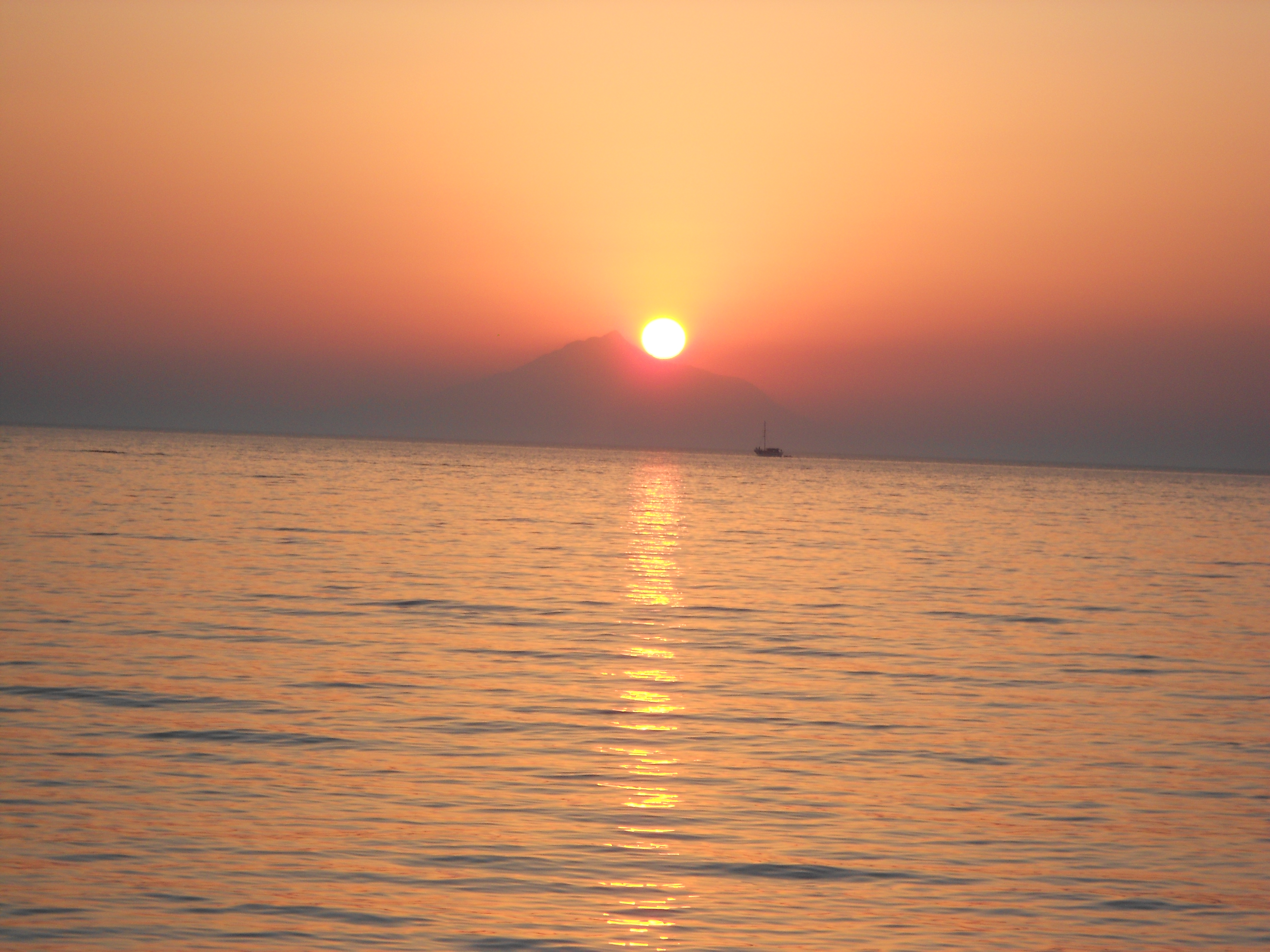
Map showing mt. athos (today). Photo of mt. Athos from the island of limnos (NE Aegean)
In 1386, Athos-Aspis belonged to Pé-Bernard de Gestas. By the 16th century, his family had no male heirs and the hamlet passed to the La Lanne family via Quiterie d’ Athos. Her husband sold the hamlet to a neighboring family, Tamonet de Sillègue, and his eldest son Peyreton on July 8, 1557.
The Sillègue family was named after a hamlet close to Autevielle. Autevilelle was a larger settlement on a crossroads, and better situated in terms of access and bringing revenue. Peyreton de Sillègue bought Autevielle in the summer of 1553 from Gabriel de Béarn. Like d’ Artagnan’s family from Lupiac, the Sillègue family were merchants with sufficient wealth, which they used to purchase land, a form of social mobility that was available to the merchant classes, so that they could rise into low rank, land-gentry. Athos-Aspis, Sillègue, and Autevielle formed a large enough territory to ensure revenue from agriculture, travelers, and from the river that runs through Autevielle. There was a château at Autevielle and probably a smaller château at Athos-Aspis. Very little remains of the latter. The former survived into the 20th c but was destroyed by fire in 1942 or 1943.
Peyreton married twice. From his first marriage he had a son, Bertrand. His second marriage took place later in his life and his second wife, Marie de Munein was sister of his son’s wife. From his second marriage he had two sons, Simon and Daniel, and a daughter, Catherine.
Armand, “our Athos”, was the son of Bertrand, Peyreton’s son with his first wife. As first-born, Bertrand, Armand’s father, was heir to the lands at Athos-Aspis, Sillègue, and Autevielle. Around 1607, Bertrand married and his wife was a member of the du Peyrer family, which was the same family as that of the future captain of the King’s Musketeers, M. de de Tréville (Jean-Armand du Peyrer, Comte de Tréville). The name of Bertrand’s wife is not recorded thus it is not clear how she was related to Tréville although some sources mention her as his sister. However, there is no reliable evidence that the relationship was so close. Tréville considered her sons cousins of some kind.
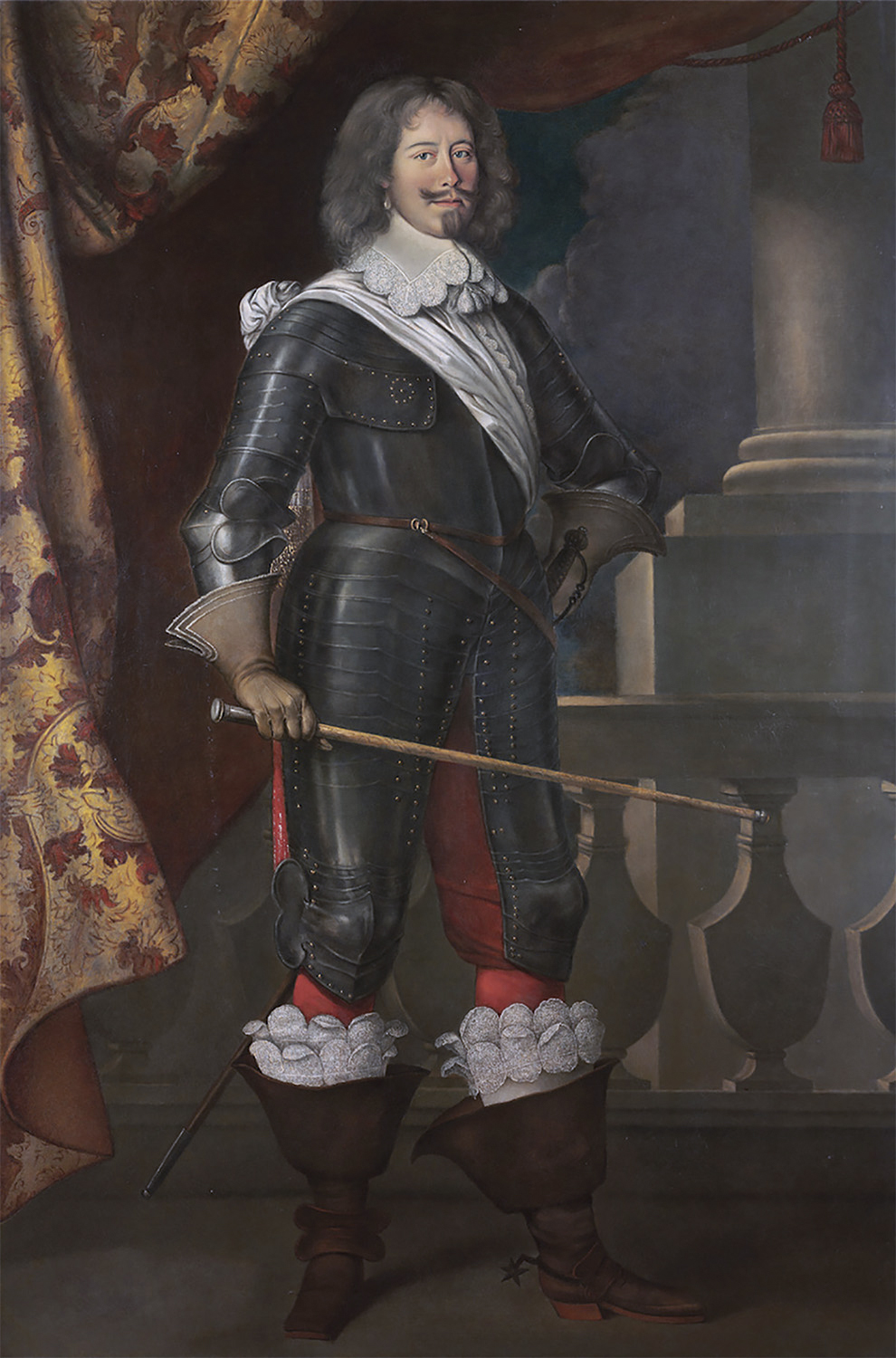
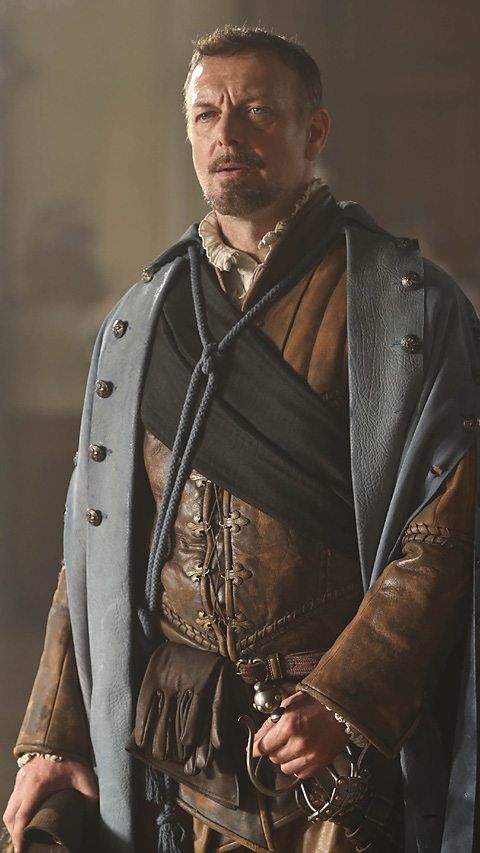
Portrait of the Comte de Tréville by le Nain (private collection)/ The MUSketeers, bbc, hugo speer as Tréville.
Bertrand and his wife had (at least) two sons: Jean and Armand (“our Athos”). Jean was most likely the eldest son and inherited the lands belonging to the family. He married Jeanne de Bachoué in June 1633. Through him, the family line survived to the end of the 17th century. His son Pierre married Charlotte de Vigner from Toulongeon and died in January 1674. Pierre’s son, Jean, was in possession of Autevielle in 1675 and again in 1685, but in 1689, when he was last documented, his title was Lord of Icharre. What became of the lands around Athos-Aspis is not known.
Back to Armand, “our Athos”, who was most likely, Bertrand’s younger son, born ca. 1615. Two more things are known about him. He entered the King’s Musketeers through his relative, Tréville, in 1643 (age 27-28?) and he died in Paris soon after, on December 21, 1643. The register of Saint-Sulpice where his burial service was held has survived, and the entry reads:
Funeral procession, service and burial of the late Armand Athos Dautubiele [sic], musketeer of the King’s guard, and gentleman of Béarn, taken close to the market of Pré-aux-Clercs.
“Taken” suggests a violent death, such as an ambush, a robbery, or a duel. There have been some attempts to piece together the circumstances of Armand’s death through the pseudo-memoir of Courtliz de Sandras who describes an incident during which d’ Artagnan is set upon, near Saint-Germain, by thugs paid by a certain English “Milédi”. His devoted comrades, Athos, Porthos, and Aramis come to his rescue but Athos and d’ Artagan are injured. Athos’ injuries are severe and he believes he is dying but he recovers. It has been suggested that this account may not be entirely fictional and that it may be referring to real events pointing to the fact that Charles de Batz (d’ Artagnan) and Armand de Sillègue d’ Athos were friends in their youth and that the latter died after he was wounded in some affair of honor involving the two of them.
The scenario, albeit fascinating, is highly unlikely. Courtliz de Sandras was born in 1644 and the pseudo-memoirs of d’ Artagnan were published in 1700. This is 27 years after the death of the historical d’ Artagnan in 1673. Even though Courtliz de Sandras claimed that he knew Charles de Batz personally, more than 70 years separate the publication of the memoirs from the events he describes (around 1625). Furthermore, if Courtliz de Sandras actually served in the musketeers as he claimed, it would not have been in the same regiment as the one d’ Artagnan first joined.
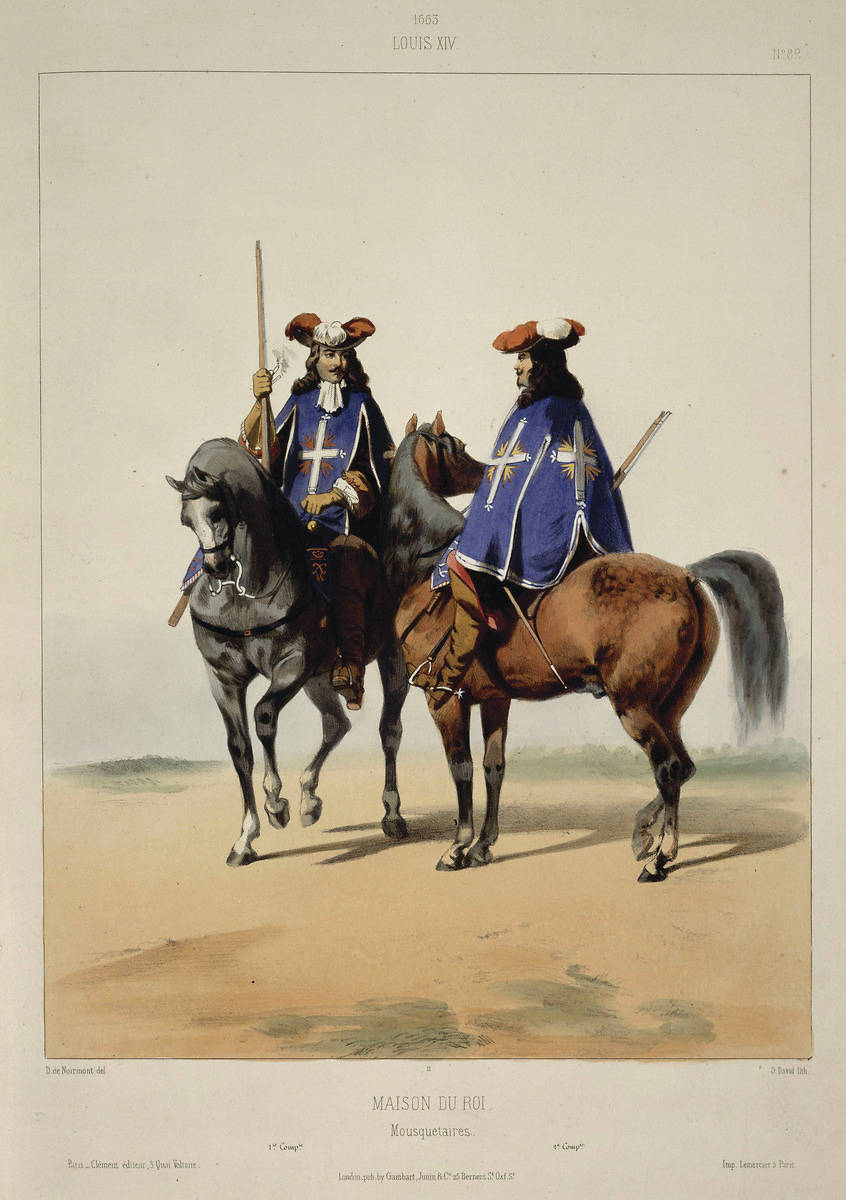
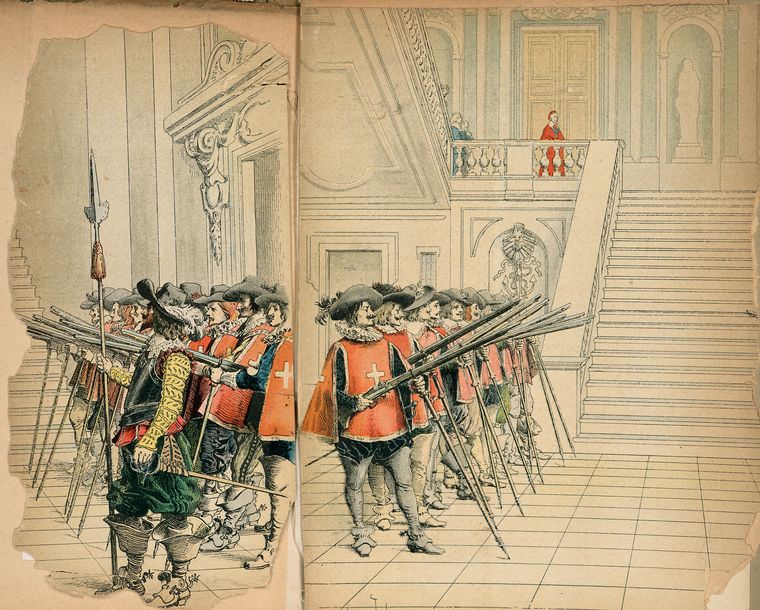
musketeers, ca. 1660/ “Cardinal’s musketeers” as depicted in dumas
The first musketeer company was founded in 1622 (cf. Dumas’ The Three Musketeers begins in 1625) forming the royal guard of the King (Musketeers of the Royal Guard). Shortly after, a second company was created by Cardinal Richelieu (fictionalized in the BBC series, for example, as “Red Guard”). At the time of Richelieu’s death in 1642, his guards passed to Cardinal Mazarin who disbanded them shortly after. He restored this regiment in 1657 with a company of 150 but upon his death, in 1661 they passed to King Louis XIV. In 1664, these two companies were reorganized: one regiment took the name “mousquetaires gris” (Gray Musketeers) from the color of their horses while the other was known as “mousquetaires noirs” as they were mounted on black horses. At the same time, the size of both companies was doubled. They were the most prestigious military regiment in France.
If Courtliz de Sandras ever served in the musketeers, as he claimed, given his age, it could never have been in the original company alongside d’ Artagnan, let alone with any one of his comrades, especially the obscure Armand de Sillègue d’ Athos who was already dead by 1643. Courtliz de Sandras’ romance is fiction, repeating tropes (e.g. the devious female adversary ambushing her lover, etc.) that were common and expected in that 17th century genre, but it is not a reliable historical source.
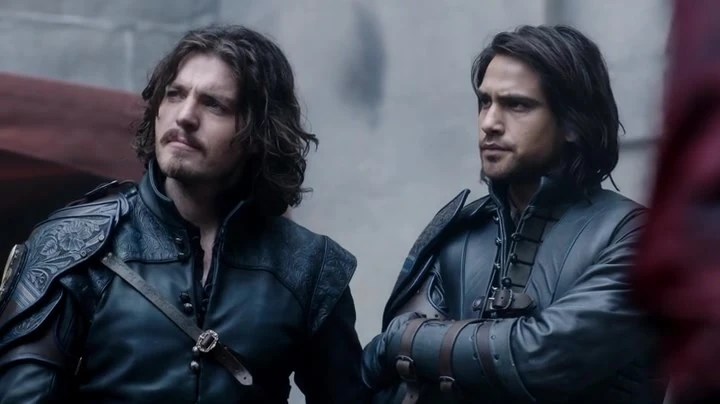
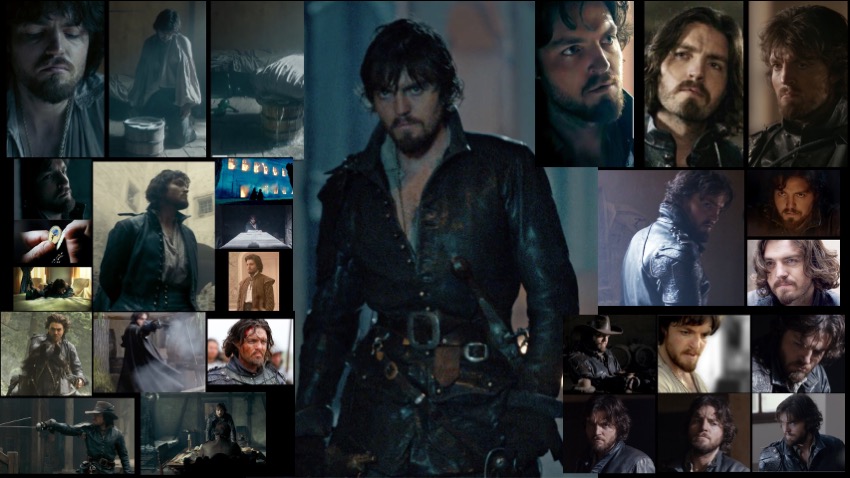
the musketeers-bbc: athos (tom burke) and d’ artagnan (luke pasqualino)
Could Armand and Charles have known each other as Athos and d’ Artagnan, their fictional counterparts, do in Dumas? Both men were in Paris in the early 1640s, both were in the military, both knew Tréville, and both were Gascons and from the same merchant-turned-land-gentry class. Historically, and contrary to Dumas, d’ Artagnan was older (b. ca 1611?). However, the birthdates of both Armand and Charles are not well documented so they could have been as much as ten years apart.
We know that in March 1633, a “Charles d’ Artagnan” was part of the company of musketeers that paraded before Louis XIII. Historically, that would have been the first company founded by Louis XIII under Tréville. Charles resurfaces on July 28, 1646 (after the death of both Louis XIII and Richelieu) as “Mazarin’s creature”. By this time too, Tréville had left his post at the Musketeers (or was removed from his post). What this means is that in 1643, when Armand joined the musketeers a short time before his death, Charles was no longer in that regiment. By that time too, the older Charles, would have been a seasoned veteran (of some sort; perhaps a spy for Mazarin also). Charles’ brother Paul, however, was a member of the company in the 1640s. Whether Armand and Charles ever met, through Paul or otherwise is impossible to know. Historically, and beyond conjecture and fictional accounts, there is little concrete evidence that there was any connection between the two men.
Fictional Athos
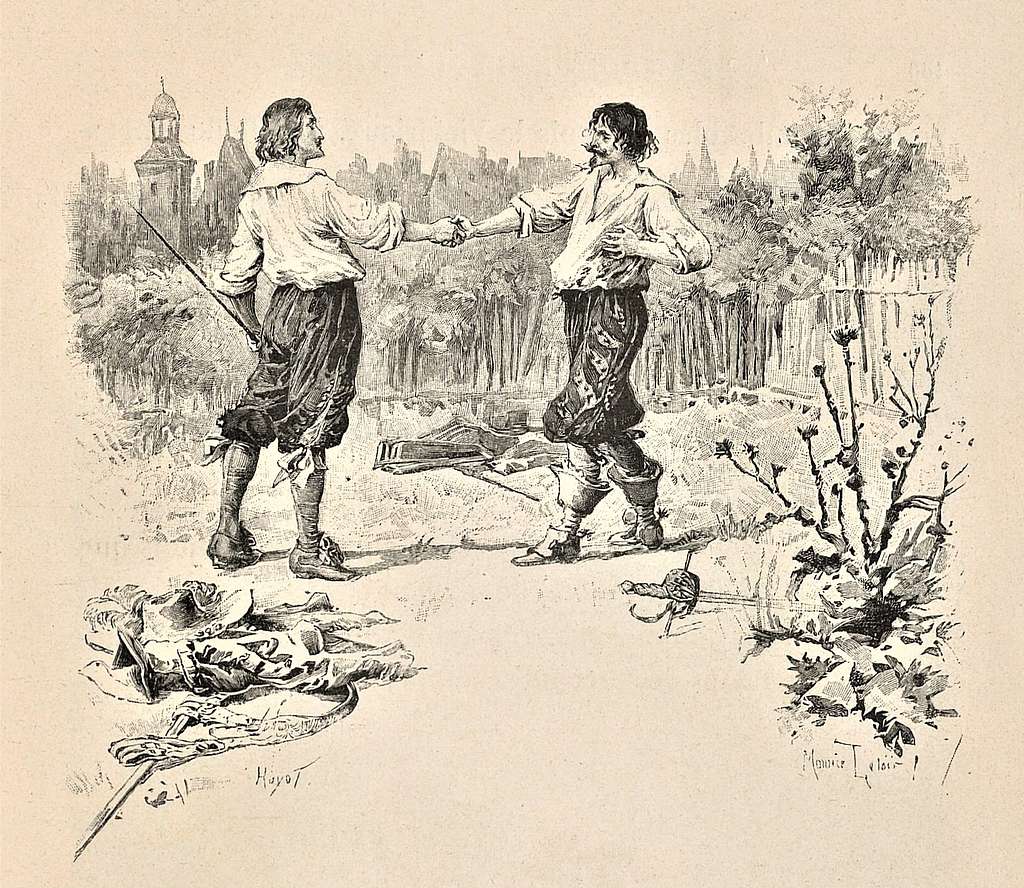
athos and d’ artagnan reconcile after their duel
The fictional character first appears in Courtliz-de Sandras’ d’ Artagnan romance along with his “brothers” Porthos and Aramis, d’ Artagnan’s close friends. However, it is in Dumas that Athos acquires such a central role in the narrative not only as a character but also as author.
Dumas’ Athos is different from the little known, historical Athos. In the Author’s Note of his Three Musketeers, Dumas weaves a fascinating tale about how his story is based on a manuscript that he discovered in the Bibliothèque du Roi with the assistance of the historian and editor M. Paulin Pâris. The folio “numbered either 4772 or 4773” included the names “Athos” on page 20, “Aramis” on page 21, and “Porthos” on page 27 and confirmed the veracity of the events described in the “Memoirs of M. d’ Artagnan” which Dumas had read earlier (that would be the Courtliz de Sandras romance). It was this manuscript which inspired him to write his story, Dumas claims, and the full title of this fictional (and lost, of course!) manuscript was:
THE MEMOIRS OF M. LE COMTE DE LA FERE ;
Relating to some of the Events which passed in France
about the End of the Reign of Louis XIII,
and the Beginning of the Reign
of Louis XIV
In other words, Dumas makes Athos the author of the story, although it seems that half-way through the first part of The Three Musketeers, he abandons this narrative device. He returns to it in The Vicomte de Bragelonne or Ten Years After, (Chapter IV-Father and Son), where Raoul comes back to Bragelonne to find his father working on his Memoir. In effect, Dumas makes Athos the original “author” of his story (even though, admittedly, it is hard to find a voice other than Dumas’ anywhere in the stories!). So, who is this “author” whose memoirs inspired Dumas?
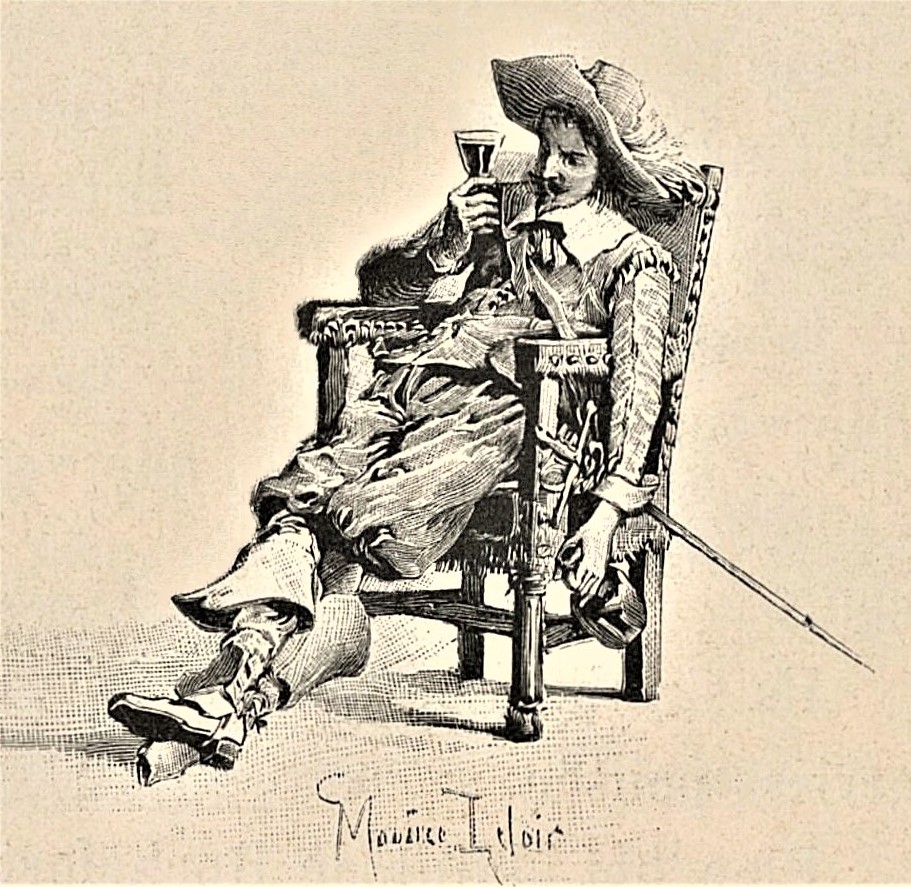
athos. engraving by jules huylot after a drawing by maurice leloir for a reissue of the three musketeers, paris calmann-levy, 1894
In Dumas, Athos is the oldest of the Musketeers. He is “scarcely thirty” (Chapter 7, “The Domestic Manners of the Musketeers”). For comparison, consider that the Three Musketeers begins in April 1625, and that although in Dumas and on film he is depicted as middle-aged, the historical M. de Tréville, was 27 years old in 1625 (and in effect, same age or even younger than Dumas’ Athos). Consider also that the historical Athos was killed around the age of 27 or younger.
Dumas portrays Athos as the quintessential “Knight”– a “Sir Galahad” from the Arthurian romances– the model nobleman, impregnable, honorable, effortlessly graceful, following the tropes of medieval court-romances as well as early 19th c romantic literature, including retellings of medieval romances that became popular and part of the aesthetic of the early 19th c (e.g. Sir Walter Scott, Tennyson, Keats, the Pre-Raphaelite Brotherhood, etc.).
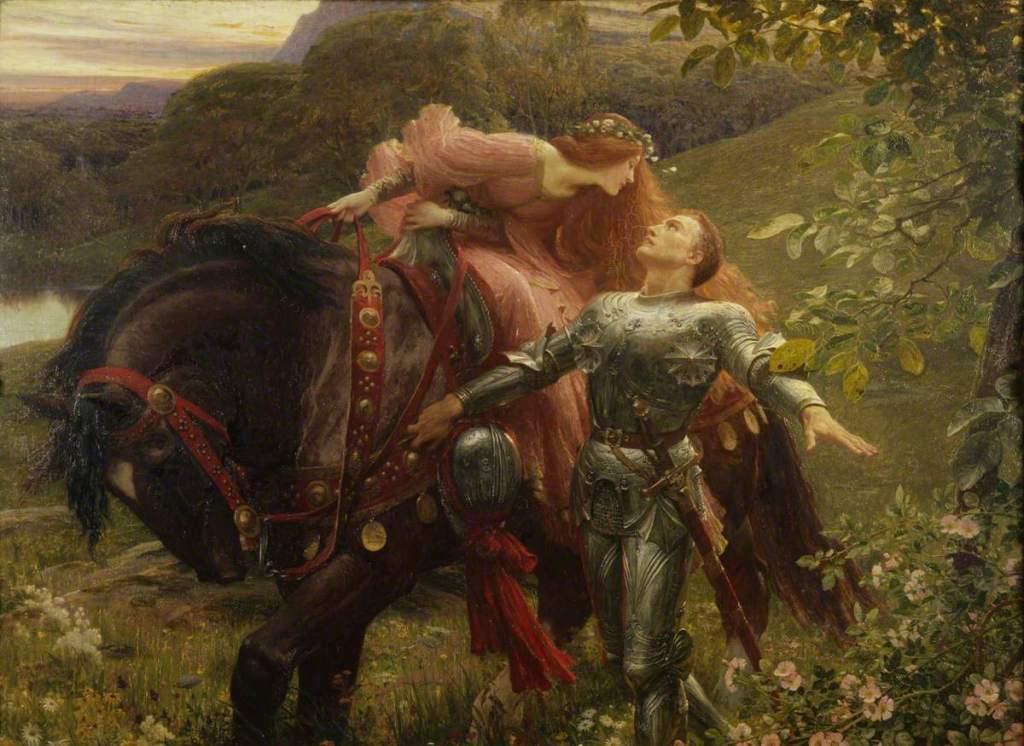
Dicksee, Frank; La belle dame sans merci; Bristol Museums, Galleries & Archives exhibited in 1901
In the same vein, Athos is the noble knight “tried” or “tortured” by love: there is, in Athos’ background a dark melodramatic story involving a “belle dame sans merci” that makes him cynical and distrustful of women, and at times (esp. in The Three Musketeers) misogynistic, at least for our contemporary sensibilities. As befits the “tortured-noble type”, Athos is described by Dumas as reticent, reserved, austere, and “almost an old man”. He is aloof to women and to romantic feelings and entanglements (often mocks such feelings): “although he possessed great personal and mental attractions, no one ever knew him to have a mistress” (Dumas, The Three Musketeers, Chapter 7).
Athos’ fictional background is fragmented and at times conflicting, which is convenient (he is kept “mysterious”). Commentators usually connect such discrepancies to serialized writing. It is, however, tempting to see such discrepancies as part of the fictional character: very much like his fragmented and conflicting backstory in Dumas, Athos is a fragmented and conflicted man.
What do we know about Athos from Dumas?
In the Three Musketeers, Chapter 27 (The Wife of Athos) Dumas includes a detailed description of the musketeer, for whom d’ Artagnan feels great admiration; even awe.
In fact, by the side even of the of the elegant and noble courtier, M. de Treville, Athos in his brigh days, might advantageously sustain comparison. He was of only medium height, but his figure was so admirably formed and proportioned that, more than once, in his sportive contests with Porthos, he had subdued the giant, whose physical power had become proverbial amongst the musketeers. His countenance, with its piercing eyes and aquiline nose, and a chin chiseled like that of Brutus, had an indescribable character of dignity and grace. His hands, of which he took no care, were the despair of Aramis who cherished his at a great expense of almond paste and perfumed oil. The sound of his voice was penetrating and, at the same time, melodious. And then-a something altogether indefinable in Athos, who shrunk from all display-there was a delicate knowledge of the world and the customs of the most brilliant society, that was perceptible, apparently without his being conscious of it, in all his minutest actions. (Dumas, The Three Musketeers, Chapter 27).
In the same description, Dumas (through d’ Artagnan) tells us how Athos is a most attentive host, who knows how to place his guests according to rank, ancestry, and achievement; that he is well versed in heraldic science and in the genealogies, alliances, arms, and origins of arms for noble families; that he understands the minutiae of etiquette; that he is well versed in the rights of great landowners; and that his understanding of falconry compares to, or exceeds, that of the King.
Athos rides and fences “to perfection” like all noblemen of the period, but, unlike many noblemen, is very well educated (e.g., occasionally corrects Aramis’ Latin). But “this extraordinary man, this creature so beautiful, this essence so fine, was seen to turn insensibly toward a material life.” Athos, Dumas (or rather, d’ Artagnan) tells us, prefers to be alone and drinks: “then, in the place of the vanished demigod there remained scarcely a human being: his head drooped, his eye was dull, his voice heavy and languid; and he would look for hours at nothing but his bottle and his glass, or at Grimaud [his servant].” Athos is prone to profound melancholy, d’ Artagnan observes keenly, although he cannot explain the cause of this malady. D’ Artagnan notices that “Athos never received any letters, and never did anything which was not known to his three friends.” Athos’ sadness is not the result of wine, or caused when he gambles away his money-which Athos does recklessly and often, “without his handsome black eyebrow having been depressed or raised by a hair’s breath; without his hand having lost its pearly hue”. Athos’ sadness is also not the result of cold and gloomy weather: “June and July,” d’ Artagnan notices, “were the bad months for Athos.” D’ Artagnan concludes that: “it was not the present that he grieved; and he shrugged his shoulders when anyone spoke to him of the future. His secret sorrow, then, had reference to the past.” (Dumas, The Three Musketeers, Chapter 27).
Athos’ suffering, his recklessness with his money, health, and life, and his self-inflicted isolation and punishment are the result of having executed his wife, a young woman “below his rank”, whom he thought was the pious sister of a curate, only to discover that she was a branded thief. The curate who passed as her brother was her lover with whom she had escaped from the Benedictines of Templemars, where she was a nun, after they robbed the church. It is not entirely clear if Athos feels guilty for his violent act–he seems to have hanged his 16-year old wife in a fit of rage from a tree with a makeshift noose, which explains how she might have escaped–or if he is angry with himself for falling for such a woman. Perhaps it is a bit of both.
Athos’ social standing is perplexing too. We discover that he is the Comte de la Fére; a title that is not particularly “elevated” vis-a-vis e.g. the description of his exceptional merits. One can argue that the description is through the eyes of d’ Artagnan who is younger, the son of a soldier and a poor Gascon, and awestruck by Athos’ nobility. Still “Comte” is land-gentry and not particularly “high” as titles go. Unless, of course, there is more to Athos’ genealogy.
In Twenty Years After (Chapter LXXXVIII: “Strength of Mind and Strength of Arm (concluded)”) upon learning by Comminges that Athos has been arrested just like him and d’ Artagnan, and that Athos is to meet with Mazarin, Porthos bemoans:
“A fine affair,” growled Porthos, “a great favor! Good heavens! Monsieur the Comte de la Fére, whose family is connected with the Montmorencys and the Rohans, is quite equal to M. de Mazarin.”
This is the most specific about Athos’ family that Dumas gets anywhere in his entire saga, and still it is vague. The Montmorency and the Rohan families were large, with multiple offshoots (not all equally “noble”) and with complicated histories especially during the period of the Wars of Religion. At the same time, the names would have been easily recognizable as “ancient nobility” by Dumas’ readership, the French and non-French readership alike (given also the politics of 19th c France).
Earlier in the same book (Chapter XVI: “The Château de Bragelonne”) we find Athos living near Blois, at the fictional estate of Bragelonne, which he has inherited “from a relative” after leaving service. The title attached to the estate is not clear, but Raoul, Athos’ son with Chevreuse, is “Vicomte of Bragelonne”. At Bragelonne, during a dinner with d Artagnan, we get another rare, glimpse of Athos’ family history:
Athos led his guest [d’ Artagnan] into a very plain dining room; but on one side the windows opened on the garden, and on the other on a conservatory in which some lovely flowers were growing. D’ Artagnan cast his eyes on the dinner service. The plate was very fine; one saw that it was the old family plate. On the sideboard was a superb silver ewer; d’ Artagnan stopped to look at it.
“Ah that is a splendid piece of art,” said he.
“Yes, replied Athos; it is a chef-d’oevre of a great Florentine artist named Benvenuto Cellini.”
“And the battle it represents?”
“Is that of Marignan. It is the moment when one of my ancestors gives his sword to Francis I, who has just broken his own. It was on that occasion that Enguerrand de la Fére, my ancestor, was made Knight of St Michael. Besides, the king, fifteen years later–for he had not forgotten that he had fought for three hours with his friend Enguerrand’s sword without its breaking–made him a present of that ewer and of a sword which you have perhaps seen formerly in my possession, which is also a fine piece of goldsmith’s work. Those were the days of giants,” said Athos. (Dumas, Twenty Years After, Chapter XIV)
The “Battle of Marignan” took place at Melengano, SE of Milan. The French under Francis I (1494-1547) won a victory over the Swiss in 1515. Athos’ ancestor is fictional although the Order of Saint Michael (founded in 1469) was real. It became the Ordre du Saint-Esprit in 1578, the ancien regime’s primary chivalric order. It was abolished in 1791, revived during the Restoration, and finally disappeared in 1830. Dumas, who was a keen collector of honors, was extremely knowledgeable in these details. At the same time, such specific “honors bestowed” to Athos’ ancestor would be recognizable by the readership and adds to the character’s “innate” and “ancient” nobility. Athos himself is awarded a number of honors throughout the entire saga which he exhibits at strategic moments.
In The Vicomte de Bragelonne (or Ten Years After), Dumas describes Athos as he waits to meet Mazarin upon returning from England where he and d’ Artangan using Planchet’s money and a million that Charles I secretly bequeathed to his son (an inheritance only Athos knew about) have restored Charles II to the throne. Athos waits for Mazarin “admiring a very fine Raphael” (Mazarin was known for his collections of art) and dressed to impress. Athos does not particularly like Mazarin-thinks him crude among other things- and remains throughout the saga a “Frondeur” even after the Fronde fizzles out, reflecting a “cavalier spirit” which Dumas endorsed even vis-a-vis contemporary, 19th c French politics. Given the question of authorship (Dumas/Athos) the fact that Athos more than any other character reflects Dumas’ political (or “non-political”) stance is noteworthy.
Dumas tells us that: Athos was dressed in black, with a simple lacing of silver. He wore the Holy Ghost, the Garter (e.g. Charles I bestowed this upon both Athos and Aramis for their bravery fighting on his side; Twenty Years After, Chapter LVIII “The Avenger”), and the Golden Fleece, three orders of such importance, that a king alone, or else a player, could wear them at once. (Dumas, The Vicomte de Bragelonne or Ten Years After, Chapter XL, An Affair of State)
Then, there is the sword which Athos mentions to d’ Artagnan during their dinner in Bragelonne. The first time we read about this sword is in the Three Musketeers (Chapter 7 “The Domestic Manners of the Musketeers”.) We find Athos living at the Rue Ferou “at two paces from the Luxembourg” (i.e. not far from the Hôtel de Tréville).
The street was established in 1517 but it does not appear on maps of the 17th century, even those later than 1625, for example, the 1648 Jean Boisseau map of Paris. It appears later, in 18th c. maps e.g. the Claude Roussel map of 1703. Strangely, the history of this street, especially in the 20th century is associated with a number of poets, writers, and painters. “Strangely”, because Athos, Dumas’ fictional character, is an author himself!
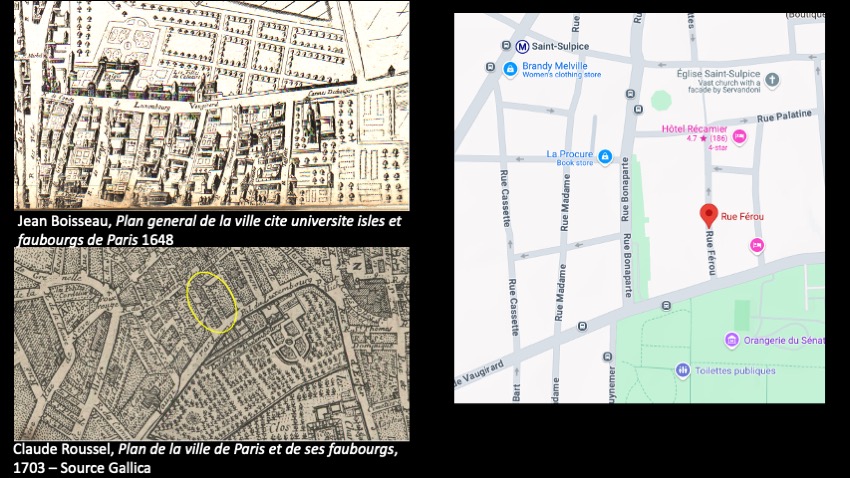
maps of paris including contemporary map showing the location of rue ferou
Dumas writes:
His habitation or lodging consisted of two small rooms in a very neatly-furnished house whose mistress was still young and pretty, but ogled him in vain. Some few fragments of long-departed splendor adorned the walls of this modest lodging; such as a richly-mounted sword, which looked of the age of Francis I, and of which the handle alone, encrusted with precious stones, might be worth about two hundred pistoles. Nevertheless, Athos even in moments of the greatest distress, could never be persuaded to dispose or pawn it. […] Besides this sword, he had the portrait of a nobleman of the time of Henry III, dressed with great elegance, and adorned with the order of the Saint-Esprit; and this portrait had some slight resemblance to Athos, a certain family likeness, which denoted that this great noble, a royal knight was his ancestor. Lastly, a box of splendid jewelry-work, with the same arms as the sword and portrait, completed a mantel decoration which clashed fearfully with the furniture. Athos always carried the key of this box; but one day he opened it before Porthos, and Porthos could bear witness that it contained only letters and papers; love-letters and family records no doubt. (Dumas, Three Musketeers, Chapter 7).
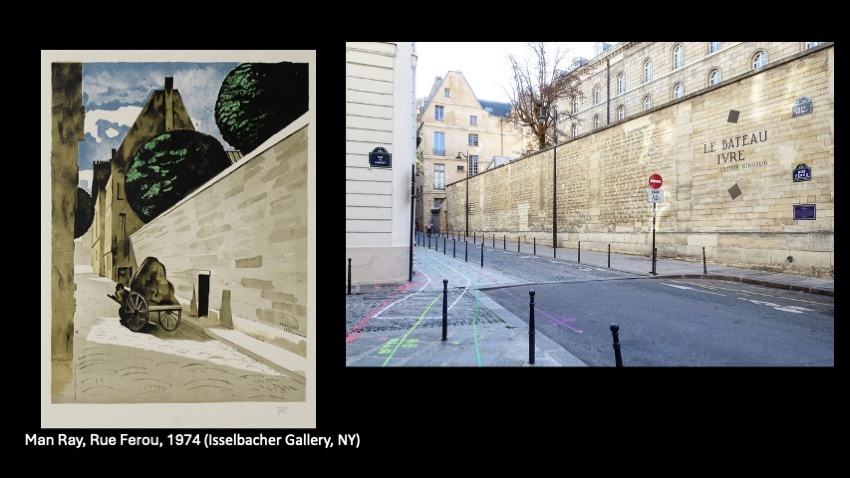
rue ferou today (photo) and painting by man Ray (1974) key figure of dada/surrealism- man Ray lived and worked at Rue ferou no. 2 scott fitzgerald and his wife zelda also lived here in 1926 (no. 6 hotel de Luzy). The “writing on the wall” (photo), was added on 14 June 2012, and it is the complete poem The Drunken Boat (Le Bateau Ivre) by French poet Arthur Rimbaud (1854-1891). But, the words are written from right to left, instead of left to right.
Athos’ backstory in Dumas, unlike the backstories of his famous comrades, including d’ Artagnan, is consistently written through things: a sword, a portrait, a jewelry-box, a silver ewer, honors and medals, and most importantly, in the Three Musketeers: a sapphire ring.
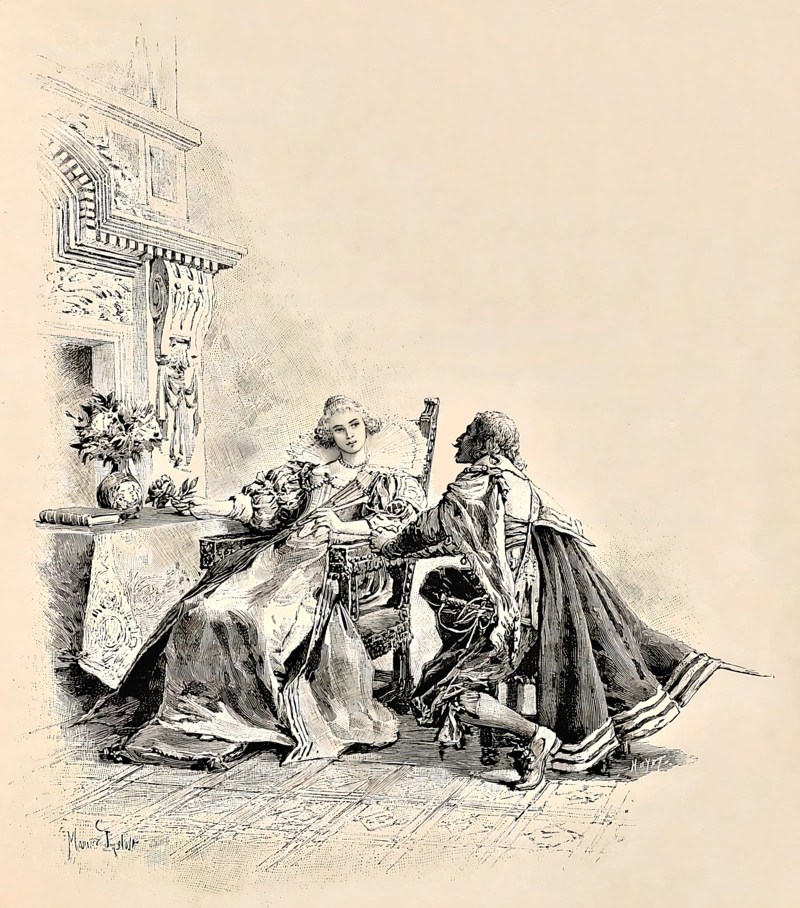
d’ artagnan courts milady pretending to be de Wardes and receives a sapphire ring as a lovers’ gift.
Whilst still speaking, Athos looked earnestly at the sapphire, encircled with diamonds, which d’ Artagnan now wore in the place of the queen’s ring, which was carefully deposited in a case. “You are looking at this ring?” said the Gascon, proud of displaying, before his friends, such a splendid gift.
“Yes,” replied Athos; “it reminds me of a family jewel.”
“It is beautiful, is it not?” said d’ Artagnan.
“Magnificent!” rejoined Athos; “I did not believe that there were two sapphires existent of so fine a water. Did you exchange your diamond for it?”
“No,” replied d’ Artagnan; “it is a present from my beautiful Englishwoman, or, rather my beautiful Frenchwoman–for although I have not asked her, I am sure she was born in France.”
And this ring was given to you by her ladyship,” said Athos in a voice in which it was easy to perceive extreme emotion.
“Yes, by herself; she gave it to me last night.”
“Let me look at it,” said Athos. […]
Athos examined it, and became very pale; he then tried it on the ring-finger of his left hand, and it fitted as if it had been made for him. A shade of anger and revenge passed across the generally calm forehead of the gentleman. “It is impossible that it can be the same,” said he. “How could this ring come into the hands of that lady? And yet, it is very strange that two jewels should be so singularly alike.”
“Do you know that ring?” asked d’ Artagnan.
“I thought I recognized it,” said Athos, “but I daresay I am deceived.”
He then returned the ring to d’ Artagnan, without, however, ceasing to fix his gaze upon it. “Let me entreat you,” said he, an instant afterwards, “either to take that ring from your finger, or to turn the stone inside: it summons up to me such painful remembrances, that I should not be collected enough for any conversation. […] But stop, let me look at that sapphire again? The one I mentioned had one of its surfaces scratched by an accident.”
D’ Artagnan again drew off the ring, and handed it to Athos. Athos trembled. “Look,” said he, “look! Is it not strange?” And he pointed out to d’ Artagnan the scratch that he remembered should be there.
“But whence came this sapphire ring, Athos?”
“It was my mother’s, who had received it from her mother. As I told you, it is an ancient jewel, which ought never to have gone out of the family.”
“And you–sold it?” demanded d’ Artagnan with some hesitation.
“No,” replied Athos, with a singular smile; “I gave it away during a moment of love, even as it was given to you.” (Dumas, Three Musketeers, Chapter 35, “All Cats are alike Gray in the Dark”)
This is a long scene. Dumas belabors the story of the sapphire ring, because this is an “anagnorisis”, a “moment of recognition”: the literary moment, in a tragedy, when a character makes a critical discovery which will change their understanding of themselves and/or their situation. The sapphire ring is the first clue that the woman Athos executed, the wife he (supposedly) loved, is not only alive but is d’ Artagnan’s lover and Richelieu’s notorious spy: Milady de Winter.
One would expect that a story so crucial would be consistent, but it’s not. Only three chapters later, the story of the ring changes:
“Be it so my dear Athos; but first let me return to you this ring, which I received from that woman. This sapphire is yours. Did you not tell me it was a family jewel?”
“Yes; my father gave two thousand crowns for it, as he formerly told me; it was part of the marriage present that he made my mother. It is magnificent. My mother gave it to me; and, instead of guarding it as a sacred relic–madman that I was!–I gave it to that wretch.”
Dumas, Three Musketeers, Chapter 38 “How, without disturbing himself, Athos obtained his equipment”)
Commentators attribute the inconsistency to the serialized format of writing and Dumas’ tendency to make changes as he wrote with little care for editing. But this is not some minor detail, and, in fact, many details in Dumas remain consistent even between entire books, for example, details about Athos’ sword in The Three Musketeers and the family connections and history it denotes, which is extended in Twenty Years After to include the depiction on the silver ewer. This story that he tells d’ Artagnan in Twenty Years After adds little to what we already know about his ancestor, Enguerrand, but returning to it and adding details certainly makes that history vivid and plausible. On the other hand, the sapphire ring is crucial. The object leads to a revelation and marks a moment of “recognition” that is essential to the narrative and at the core of Dumas’ story. Furthermore, the two different stories that Athos tells about the ring are only three chapters apart.
Can we, instead, see this major “inconsistency” not as an inconsistency at all but as intentional and meaningful–as an element of Athos’ character in Dumas? If this is so then, Athos does not only keep his past a secret; he dissimulates. He gives two stories about the ring knowingly, and we may inquire if either of them is true. If Athos is the original “author” of this story (as Dumas clearly intends him to be), then the story Athos tells may not be entirely true either. The twist is fascinating whether Dumas intended it or not, and inspiring for any 21st century writer.
The only information that Dumas affords us about Athos’ earlier life, besides his unfortunate marriage, and that he is well educated, is that he “spent some time in England in his early youth” which is why he speaks English well. He explains this to his comrades when they arrive in England to rescue King Charles I (Twenty Years After). No further explanation is offered, nor any other hints as to that early life in England, but Athos seems quite at ease while in England and in London.
The mystery that is the fictional Athos, deepens, if we attempt a closer look into his family history. In Dumas’ play “La Jeunesse des Mousquetaires”, staged in 1849 by the Théâtre Historique, which Dumas had purchased two years earlier and based mostly on Twenty Years After, we discover that in Dumas’ mind, Athos’ real name was Olivier. We also know that he names his son Raoul, and we may extrapolate that “Raoul” could have been a family name.
But where is Athos and his family from? Not Blois, as many commentators propose, misreading how Athos found himself at Bragelonne. Not Béarn either. Dumas’ Athos is not a Gascon like his historical counterpart.
There are clues that point to the north of France, and they have to do with the story of Athos’ wife, another character who is as slippery as Athos: Anne de Breuil, Charlotte Backson, or Milady de Winter, although we may assume that none of these was her real name.
The woman Athos (or rather, Olivier) married was a “nun at the Benedictine convent of Templemars,” (Dumas, The Three Musketeers, Chapter 65, The Judgement). The convent is an invention but Templemars is real, and it is near Lille. It was the executioner of Lille whose brother this nun seduced (resulting in her branding and his suicide) and the same “executioner of Lille” whom Athos enlisted to execute Milady at the end of The Three Musketeers.
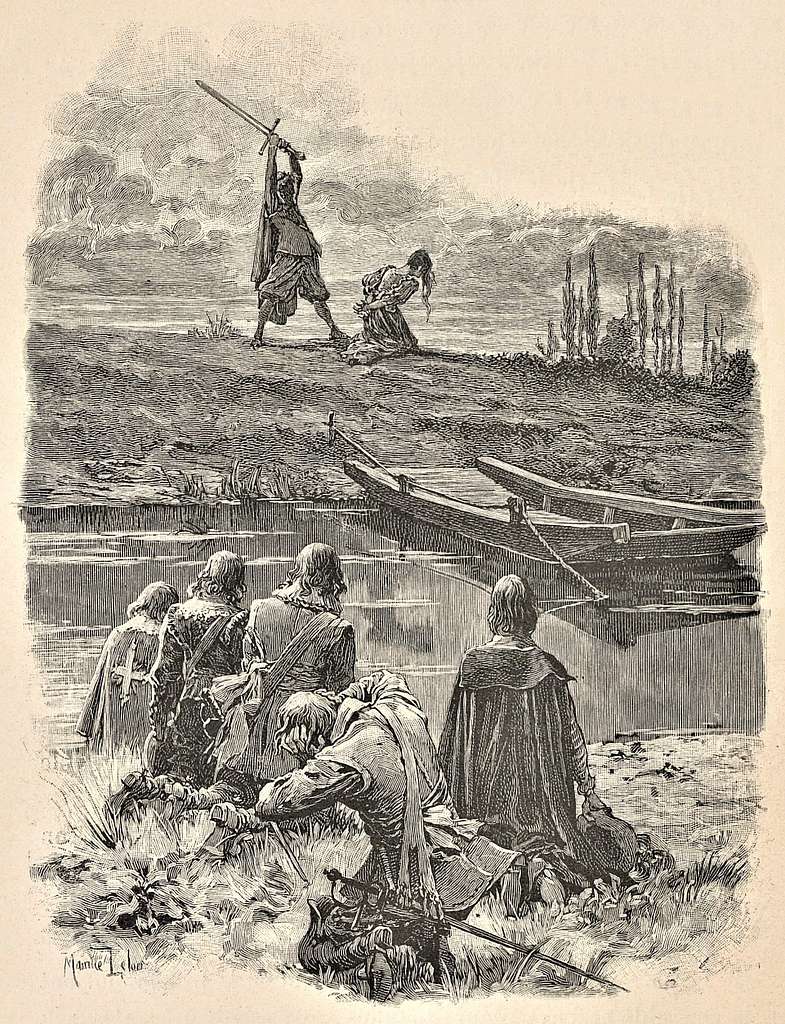
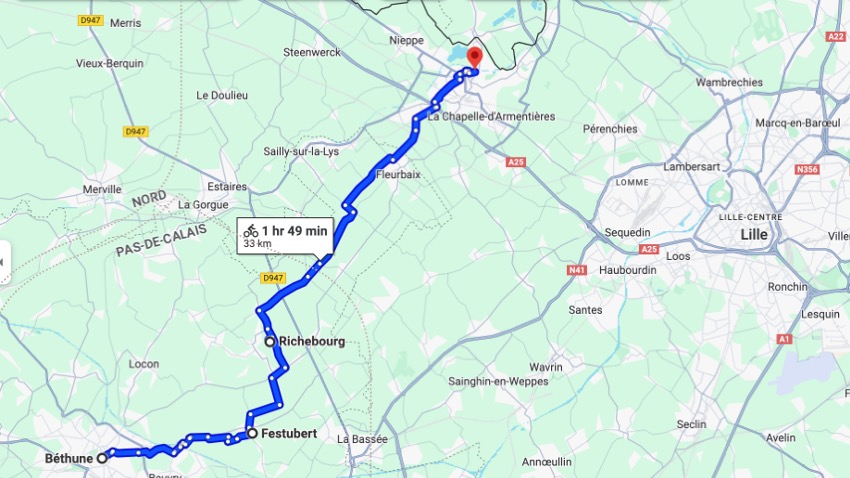
milady’s execution (in belgium) and the route from bethune to armantieres (near Lille)
Milady’s arrest and execution are at the same time perplexing and revealing, especially when it comes to their “geography”. From Béthune, where Milady poisons Constance, she travels to Armentiéres. Athos, his friends, and Lord de Winter (Milady’s brother-in-law seeking revenge for his brother’s and Buckingham’s death) escorted by all their servants, trace Milady past the villages of Festubert, Richebourg, Herlier, and Fromelle and discover her hiding at a house close to the river Lys. We are, therefore, in the north of France, at Picardy, on the border with Belgium. In fact, Milady is executed “on the other bank of the river” (Dumas The Three Musketeers, Chapter 66 The Execution), in other words, she is executed in Belgium. The reason for this is unclear.
It is not just the last act of this tragic story that takes place in the north, however. It seems that almost all of Athos’ backstory takes place around Lille. Milady’s story in Dumas begins at a Benedictine convent near Lille. She is branded by the executioner of Lille for robbing the holy relics from the church. Athos meets her and her lover (brother of the executioner of Lille), who pretends to be her brother, makes the man a curate at his estate and eventually marries the 16-year old before discovering she is branded. We must, therefore, assume that Dumas places Athos’ fictional ancestral home somewhere in the north, around Lille.
Although noble families like the Rohans and Montmorencys with whom Dumas associates Athos’ family, had lands and estates at many places, historically, neither family had significant presence in this northern region of France. There is, however, a town (today) called La Fére near Aisne, in Hauts-de France, which in the 17th century was mostly royal lands, owned by Anne of Austria. This seems to be the most logical fictional geography for the de la Fére estate in Dumas. Thus, even if his family owned lands in other parts of France, the estate where Athos married and lived with his wife was most likely La Fére, near Aisne.
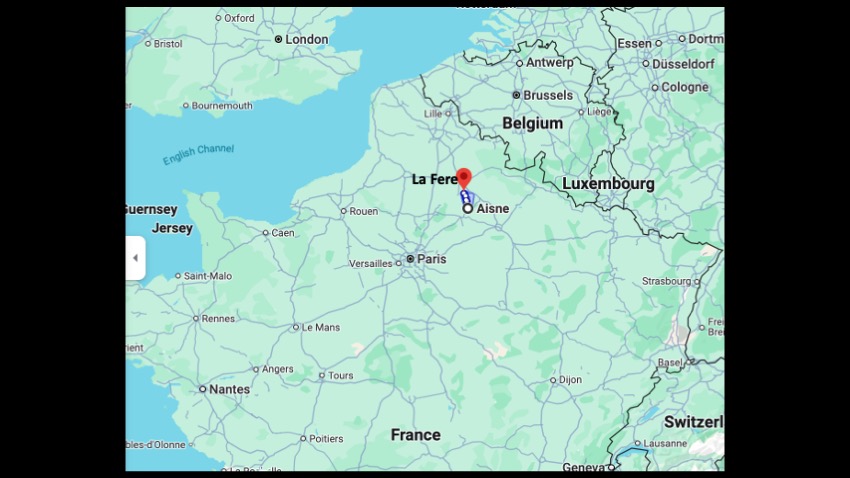
map showing la fere (near aisne)-fictional estate of athos
Athos on Film
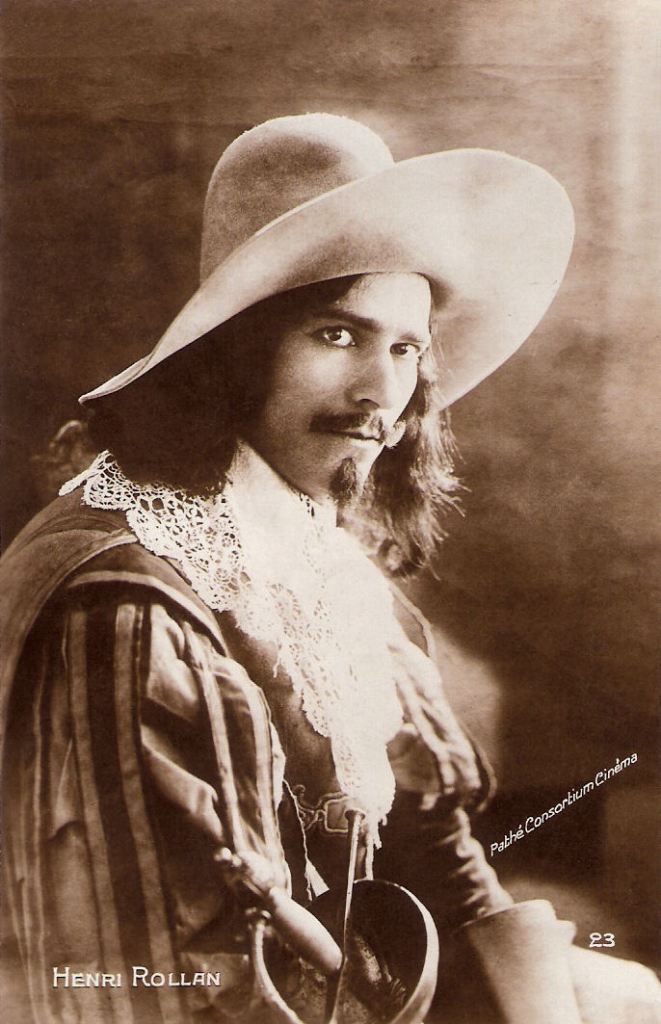
henri Rollan (Athos) in Les Trois Mousquetaires, one of the earlier films by Henri Diamant-Berger, 1921.
The Three Musketeers, as well as the rest of the stories of Dumas’ Musketeer Saga, have been featured on film since films were made. The “silent film era” begins in 1894 and the first Musketeer film is dated to 1903, after which there is a long list of Musketeer films until the first talkies and an even longer list until today. There have been as many wonderful actors portraying Athos as there have been Musketeer films. This post mentions a selected few; selected mainly because of how memorable they have been in our shared imagination, often creating “canon” beyond the original Dumas novel.
Tom Burke, The Musketeers BBC: Seasons 1-3 (2014-16)
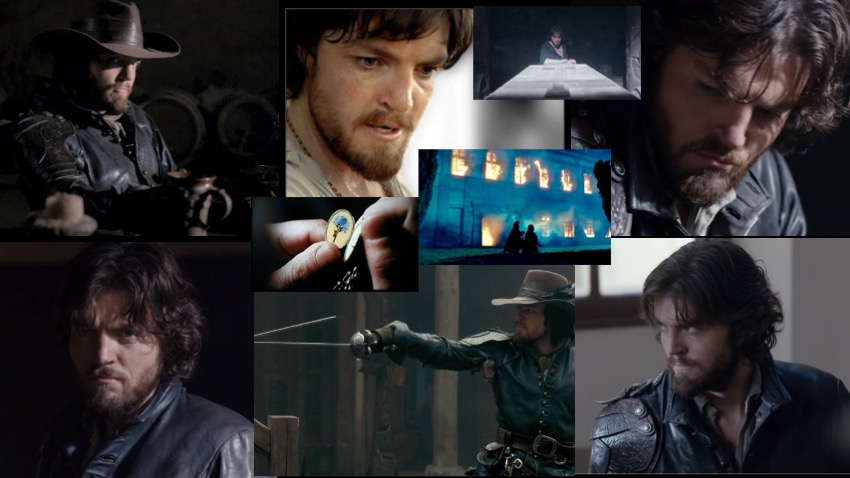
A compelling performance, and the starting point for our story is Mr. Tom Burke as Athos in The Musketeers-BBC series. This version of Athos is somewhat less “French” (vs. Dumas) and more “British” although he perfectly aligns with the “steampunk-meets-V&A” aesthetic of the series. There is something “Victorian” and “Edward Rochester” in the character of this Athos, including his changed backstory (and Milady’s changed backstory) and the burning family house (wife’s revenge). This is especially the case for the first two seasons of the series, and less so for Season 3, where the character changes significantly and is not consistent with existing “canon” (Dumas, film canon, or the canon set up by the series itself in the first two seasons).
The BBC series seems to have made the same calculation that we have made regarding situating “La Fére” in the north. In Season 2, Athos returns to his ancestral lands and to the village of Pinon, which is, in fact, near Aisne and La Fére.
Mr. Burke gives us an Athos who can be both reticent and uncontained, both reckless and disciplined, a savvy courtier, at times closer to the more mature (and interesting) Athos from Twenty Years After, a soldier, a man of duty, an “older brother” protective of his friends–especially d’ Artagnan–but also a man who suffers from guilt, jealousy, and desire (for a woman), at times rather “prude”, at times not at all, a man with many vices (he drinks but it is implied he has done much more than just drink). He is moody, consistently inconsistent, and conflicted, not unlike the Dumas character. Mr. Burke’s layered and compelling performance inspires us still as we continue the story of Athos years later with our own story!
Vincent Cassel, Les Trois Mousquetaires: D’ Artagnan/ Milady (2023-2024)
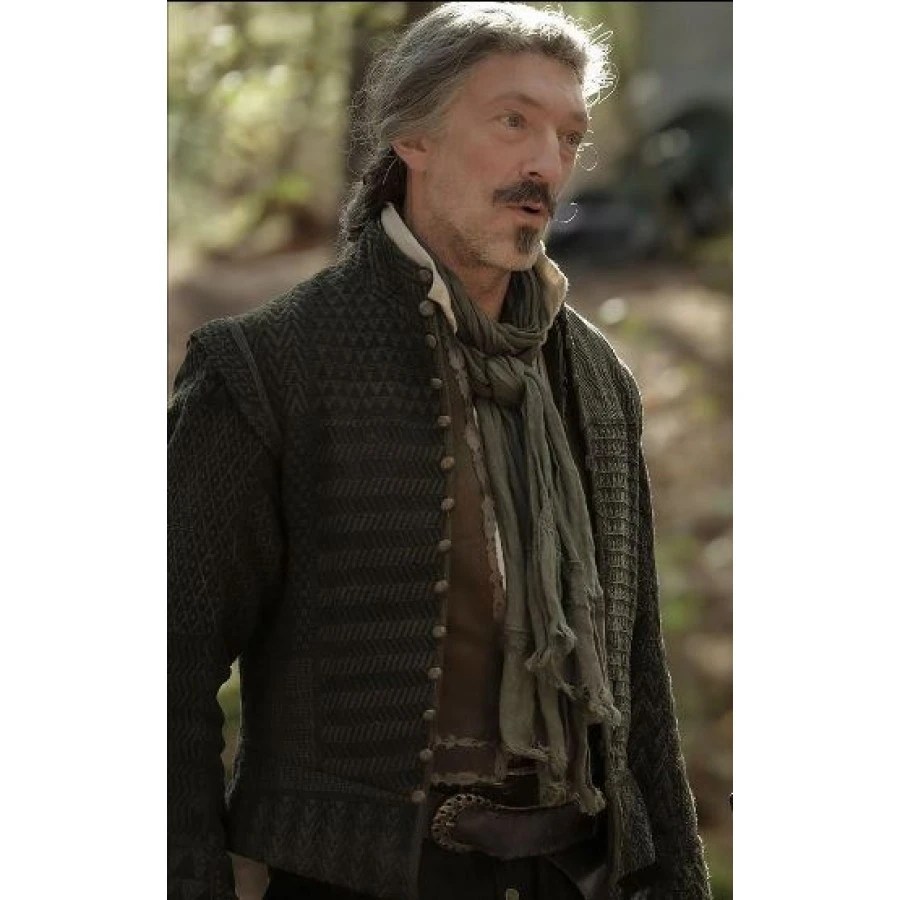
Vincent Cassel portrays Athos in this most recent 2023/4 French, two-part production of The Three Musketeers. His character is written somewhere in-between the historical and fictional versions of Athos. He is portrayed as coming from a family of Huguenots (he has a Huguenot brother at least) which is, however, neither historically attested nor canon in any fictional version of the character.
Matthew MacFayden, The Three Musketeers (2011)/ 3D version
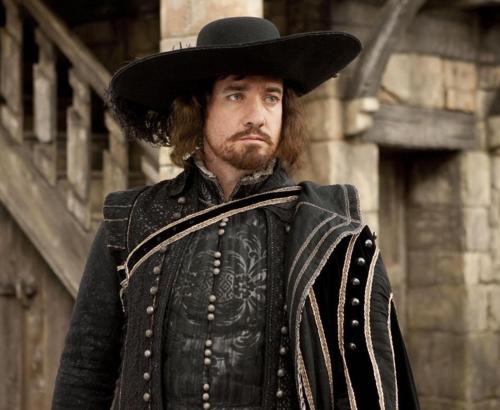
Directed by Paul W. S. Anderson. Matthew Macfaydyen portrays Athos in this film although he does not have such a prominent role. The rest of the cast includes Logan Lerman as d’ Artagnan, the wonderful, late Ray Stevenson as Porthos, Luke Evans as Aramis, Mads Mikkelsen as Rochefort, Orlando Bloom as the Duke of Buckingham, Milla Jovovich as Milady, Juno Temple as Queen Anne, James Corden as Planchet, and the absolutely brilliant Christoph Waltz as Richelieu. The film is “steampunky” (a precursor of the BBC series in terms of “style”). The film has flying balloons and comedy (just like the Lester films). It looks as if it is an adaptation of a graphic novel, although it is not (like the BBC series). Although this post is about Athos, it is impossible not to remark on the choice of Christoph Waltz as Richelieu–a most unlikely casting and the best thing about this film.
Heino Ferch, D’ Artagnan and the Three Musketeers (2005)
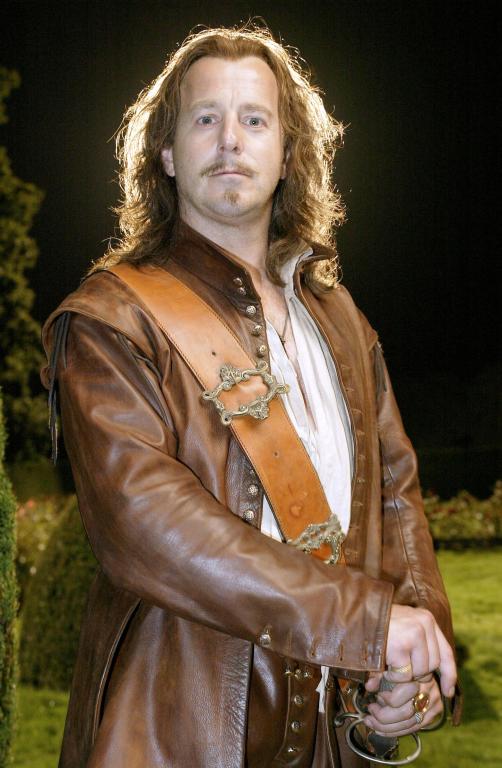
This is another French production and it includes a black magic/devil-worshipping storyline which brings the film strangely close to Arturo Perez-Reverte’s brilliant retelling of The Three Musketeers in his novel “The Club Dumas” (1993). Besides Heino Ferch as Athos, the cast includes Vincent Elbaz as d’ Artagnan, Emmanuel Beart as Milady, and Tcheky Karyo as Richelieu.
Guillaume Depardieu, Milady and the Three Musketeers (original title “Milady”) (2004)
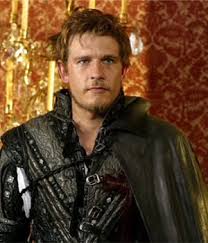
This French film was meant to be an adaptation of Dumas’ The Three Musketeers from Milady’s perspective and is loosely based on the 1986 novel “Milady mon amour: Une femme dans la tourmente (1627-1628)” by Yak Rivais. The late (and tragically lost) Guillaume Depardieu (son of Gerard Depardieu) portrays Athos (his sister Julie plays Constance) against Arielle Dombasle’s Milady. Depardieu’s Athos is different from any other version of the character, and in some ways the exact opposite of Vincent Cassel’s most recent depiction of Athos. Perhaps the reason is that we see Athos through Milady’s eyes. He is meant to be younger than Milady and there is a different dynamic between the two of them in this film unlike any other version on film. This is a relationship between a savvy and experienced woman with a less experienced man.
John Malkovich, Man in the Iron Mask (1998)
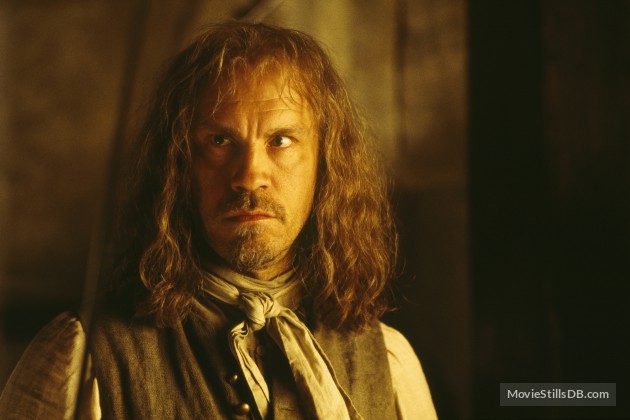
This is the best-known English-speaking version of the last installment of Dumas’ Musketeer Saga, with Leonardo di Caprio as the royal twins (Louis and Philippe). Gabriel Byrne is d’ Artagnan, Jeremy Irons is Aramis (the General of the Jesuit order, as per Dumas), and Gerard Depardieu is Porthos. There is a Raoul (Peter Sarsgaard) whose fiancé, Christine (not Louise) the evil King Louis manages to seduce. Raoul is removed to “the front” where he is killed, thus turning Athos against the King and making him actively involved in the plot to replace Louis with his twin brother, in a way adopting Philippe as his son. The death of Raoul is in Dumas but the rest is not. Malkovich portrays an edgier, feistier, older Athos compared to Dumas’ older version of the character. In fact, Dumas seems to have written Athos to such an angelic and saintly corner that all Athos can do at the end is to fade away from grief and old age. Athos’ death in Dumas, compared also to Porthos’ and d’ Artagnan’s deaths, is a disappointing finale. This film changes the Dumas story, Athos lives on, Philippe becomes King of France (calls himself Louis though), and with one very big exception–to avoid spoilers!– this version of the Man in the Iron Mask has more or less a happy ending!
Kiefer Sutherland, The Three Musketeers (1993)
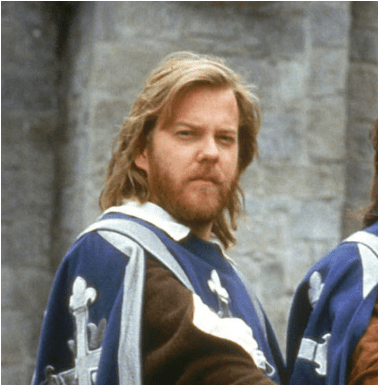
This is a US Disney production. Besides Keifer Sutherland, the cast includes Chris O’ Donnell as d’ Artagnan, Oliver Platt as Porthos, and Charlie Sheen as Aramis. Rebecca de Mornay plays Milady de Winter (whose name is Sabine for some reason, rather than Milady de Winter), a young Julie Delpy plays Constance, Gabrielle Anwar is Queen Anne, and His Eminence Tim Curry is Richelieu. As with Christoph Waltz in 2011, and although this is not a post about Richlelieu, Tim Curry single-handedly steals this film.
The original Dumas story was changed significantly in this film, including Athos’ and “Sabine’s” tragic love story. However, this was the first time that the actors portraying the characters were actually the same age as Dumas’ characters. There is a bit of 90s lore with this film. The “crazy kids” back in the 90s were fascinated by a gang of Hollywood “bad boys and girls” and that gang included Kiefer Sutherland and Oliver Platt (check out the film Flatliners!) In other words, they did not cast just any actors for this film, and certainly not just any actor to play Athos. This film captures the…Disney/Hollywood zeitgeist of the 90s!
Oliver Reed, The Three Musketeers (1973: The Queen’s Diamonds/ 1974: The Four Musketeers); The Return of the Musketeers (1989)
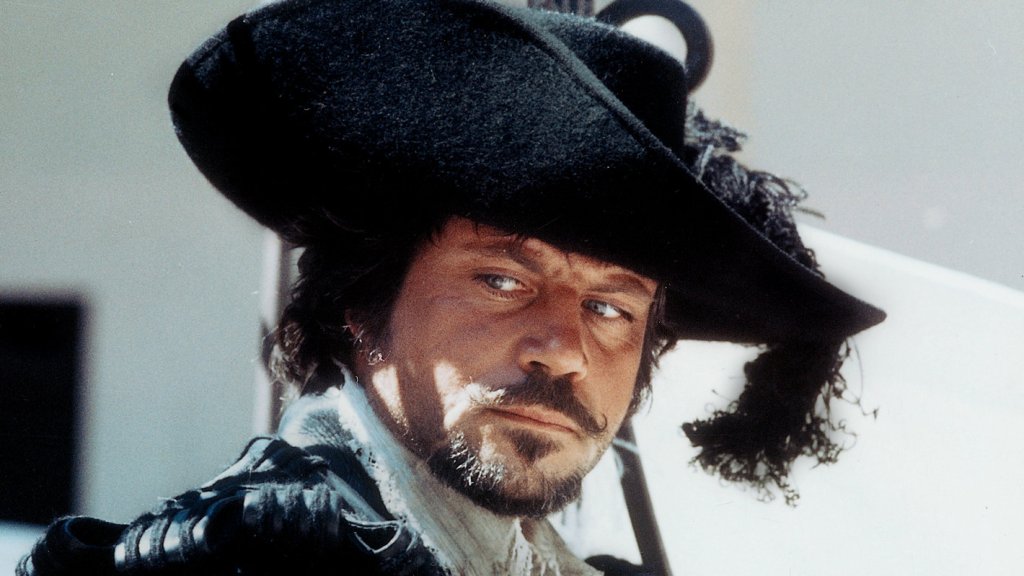
Directed by Richard Lester, produced by Alexander Salkind and his son Ilya as well as Pierre Spengler. The film also stars Michael York as d’ Artagnan, Richard Chamberlain as Aramis, and Frank Finlay as Porthos. Charlton Heston is Cardinal Richelieu, Christopher Lee is Rochefort, Faye Dunaway is a deadly Milady de Winter, and Raquel Welch is Constance (Golden Globe for best actress).
This is a strangely uneven (pair of) film(s), initially meant for the Beatles (Lester had made films with them). Labor history was also made with this film (or two films), changing the way that actor contracts are drafted in Hollywood (“The Salkind Clause”), because the actors were tricked into thinking they were making one film but ended up making two, and not getting paid accordingly. The (two) films are quite faithful to Dumas’ storylines–with minor changes. There is an attempt to add “authenticity” with the costumes, the music, the settings (filmed in Spain, and it looks like it’s Spain!), and many comical elements, which can be distracting at times. The third, 1989 film is a (very) loose adaptation of Twenty Years After with a young Kim Cattrall in the role of “Justine de Winter” (female version of George Mordaunt although she is Rochefort’s daughter).
Oliver Reed’s Athos is memorable for many viewers but miscast for others. His Athos is brutal rather than aloof and restrained, and it is difficult to see a tragic love affair affecting such a character, or driving his actions, especially vis-a-vis Faye Dunaway’s deadpan, killer Milady, who has great chemistry with Christopher Lee’s Rochefort, however. In the 1989 film, Oliver Reed returns as Athos and makes him even more crude and brutal with little relevance to Athos in Dumas’ Twenty Years After or any other version of Athos. Clearly, I am not a fan of this portrayal. At the same time, Oliver Reed’s Athos brings forth a menacing and forbidding dimension of the character that is worth watching. Where the character of Athos that Oliver Reed creates really works, however, is vis-a-vis Michael York’s, excellent, and almost iconic d’ Artagnan.
Jeremy Young, The Three Musketeers BBC (1966)/ Twenty Years Later (1967)
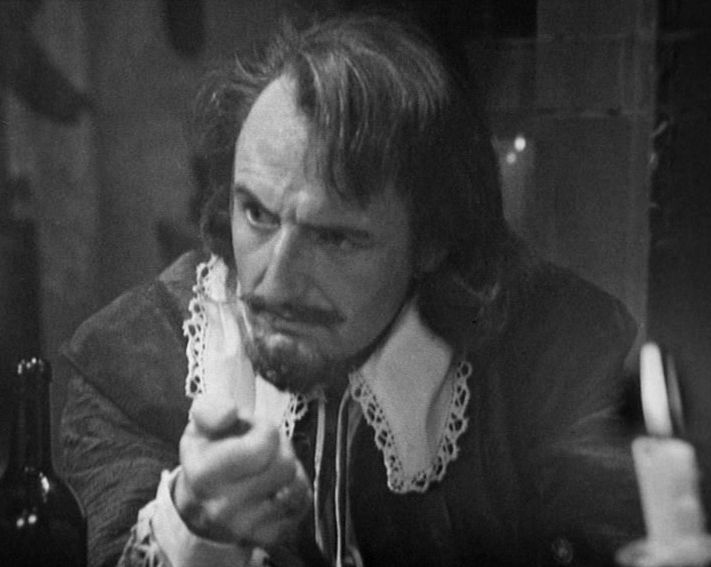
In some ways, this is a precursor to the 2014-16 BBC series, including the fact that Jeremy Brett who portrays d’ Artagnan in the first series (1966) also portrayed Sherlock Holmes with Mr. David Burke who played Dr. Watson. David Burke is the father of Mr. Tom Burke! Just two degrees of separation! This is a black-and-white series, rather low budget, and extremely close to the Dumas books. The series sounds and feels almost like an audiobook, with the actors reading from the Oxford translation.
Van Heflin, The Three Musketeers (1948)
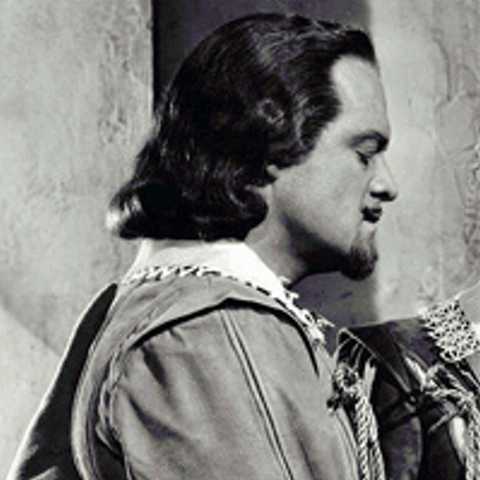
Produced by George Sidney, starring Gene Kelly as d’ Artagnan, Lana Turner as Milady, June Allison as Constance, and Vincent Price (!) as Richelieu. This is a Technicolor film US production. There is a great deal in this film that visually “references” the 1921 Douglas Fairbanks film, including “d’ Artagnan’s look”. The film is not faithful to the novel. Most changes seem to be driven by moral norms of the postwar period and/or are American cultural anachronisms specific to the postwar period. There is something very “Tiffany Thayer” in the script, with Milady portrayed as the “femme fatale” and Constance as the “girl who works in the palace”. (Tiffany Thayer wrote a 1939 retelling of The Three Musketeers, supposedly from Milady’s perspective that is americanized, anachronistic, misogynistic, and as bad and outdated as it sounds).
The fight scenes of this film are dancing scenes, just without music and tap shoes, especially where Gene Kelly is concerned. There is a plot-twist that makes no historical or narrative sense whatsoever, whereby Constance ends up in England (this, during the war with France somehow!) and Buckingham makes Constance Milady’s jailer (!) which leads to Constance’s demise. Even more strangely this plot-twist is repeated in the 2024 French adaptation (Les Trois Mousquetaires: Milady) almost intact. It still makes no sense.
Van Heflin’s Athos, despite his brief “air-time” is superb. He delivers his part with depth and subtlety and there is even some tentative chemistry with Lana Turner, so their tragic storyline is somewhat plausible. Athos’ real name in this version is “Robert”!
Veniamin Smekhov 1978, 1992, 1993, 2009
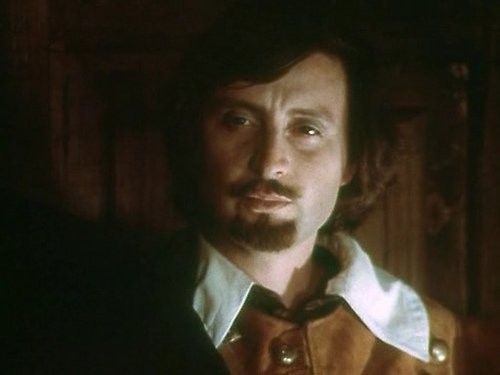
Д’Артаньян и три мушкетёра, D’Artanyan i tri mushketyora/ D’ Artagnan and the Three Musketeers (3-part series, 1978)
Мушкетёры двадцать лет спустя, Mushketeri dvadsat’ let spustya/ Musketeers Twenty Years After (4-part series, 1992)
Тайна королевы Анны, или Мушкетёры тридцать лет спустя; translit. Taina korolevi Anni, or Mushketeri tritsat’ let spustya/ The Secret of Queen Anne or Musketeers Thirty Years After (2 episodes, 1993)
Возвращение мушкетёров, или Сокровища кардинала Мазарини, Vozvrashchenie mushketyorov, ili Sokrovishcha kardinala Mazarini/ The Return of the Musketeers or the Treasures of Cardinal Mazarin (2009)
So far, all the actors listed are either English or French-speaking and the productions are French, American, or British.
But Russia has a deep and long connection with Dumas: Dumas was invited to Russia and traveled around the country. Even during his life, Dumas’ works were extremely popular in Russia and all across the Balkans (at the time, the Ottoman Empire), translated, adapted, printed, reprinted, produced on stage, and often rewritten (see, Charriere 2016, esp. Chapter 3)
In the Soviet era, the popularity of Musketeer films and adaptations continued, despite their political implications because of a number of factors, including the cultural significance of Dumas in pre-revolutionary Russia, the fact that during the Soviet era literary classics (esp. French) held a privileged position that placed them beyond censorship, as well as the cultural impact of a particular series of Musketeer adaptations for television, beginning in 1978, that became a cultural phenomenon. These are the adaptations listed, with Veniamin Smekhov in the role of Athos.
To millions of viewers, Veniamin Smekhov is Athos. Smekhov is a successful stage and film actor, director, writer, and poet, with a long and distinguished career. His first encounter with The Three Musketeers was in 1971, when he was cast as Aramis in a film adaptation of Dumas’ book. Then came the first, 1978 series, which became a cultural phenomenon and identified him with Athos.
In this series of Dumas adaptations beginning in 1978, Athos is as much a central character as d’ Artagnan (at times more so), reflecting the fact that–as per Dumas–the novel is supposed to be based on Athos’ Memoirs. With the exception of the 2009 film which is different, the rest are faithful adaptations of Dumas’ novels (do not let the “musical” part deter or fool you), perhaps the most faithful adaptations of Dumas on film, including parts of the novels that are usually left out (e.g., “The Vicomte of Bragelonne/Ten Years After”). The “Secret of Queen Anne” (1993) is probably the most faithful adaptation of the Man in the Iron Mask on film.
Smekhov brings depth to the role of Athos unlike most actors, with few exceptions, Tom Burke prominent among them. Like Tom Burke, Smekhov was already a stage actor before taking on this iconic role. Smekhov’s Athos is the closest to Dumas’ character compared to any other iteration, with the exception of Jeremy Young, who in a way, however, was reading the books. Smekhov exudes “French panache” whereas Tom Burke comes across as “too British”. He is very protective of his comrades, especially of d’ Artagnan. Because this is a series, just like the BBC series, there is time for the relationship among the four to develop just as it does in the book. The Russian series, unlike the BBC series, does not change the story of Milady (or Constance), and Margarita Terekhova (also a well known film and stage actress) portrays Milady with a killer instinct. Terekhova’s Milady is dangerous, seductive, and her chemistry with Smekhov (and his chemistry with her) is compelling. Terekhova’s Milady has a sense of humor too, a penetrating, at times, scathing gaze, the likes of which we have seen only once again, in Maime McCoy’s version of Milady, from The Musketeers-BBC.
Smekhov has written a memoir about his experience of “being Athos” entitled “When I was Athos” (1999)
Athos in our story
Our story continues The Musketeers-BBC series and is premised on that “universe” and the specific characters that inhabit the original series. This does not mean that we have not made changes or that we have not rewritten characters and storylines. Lucien Grimaud, is one such example. The BBC series serves as our proverbial springboard, but we have never felt limited by the “series canon”, quite the opposite: our story includes historical characters and events, we bring in and adapt characters and storylines from Dumas, and we introduce new fictional characters. Geographically, our story extends beyond France, which gives us the opportunity to write about places and people that are not in any Musketeer film, novel, universe, or canon.
With Athos, we started with a fully written background story from his birth and childhood, to his early youth, to his marriage, to becoming “Athos” when he joined the Musketeers. We connected that background to the moment we first encounter him in the BBC series and have “filled in” BBC storylines when needed. Our story, however, is meant to extend Athos’ story beyond the BBC series, beginning twelve years after the end of Season 3.
Following Dumas, we decided to tell Athos’ story through things: the sword, which in our story has a name, “Hauteclere”; the jewelry box where he has kept his correspondence; the sapphire ring (which he no longer possesses but is important). The BBC series included a pendant with pressed forget-me-not flowers, given to him by his wife (perhaps in lieu of the sapphire ring which is not in the series because of changes in Milady’s story). We added other meaningful things: (memories of) a Bible covered with gold filigree; a gold-colored wooden toy-horse with a red saddle; a painting of a sea shore and a wrecked boat (in fact, variations of the same scene in several paintings by the same painter). In our story, Athos’ early memories are fragmented and disjointed, perhaps because he does not want to remember, perhaps because he is afraid of what they may reveal, or perhaps because he was too young to make sense of the dramatic events that shaped his life.
Our Athos is not only a man who was forced (by duty, misplaced principles; and, in our version: immaturity) to agree to execute his wife. This is a tired trope and we don’t think it should be defining of the character even though it marks him deeply. Our Athos can be reckless and disciplined, restrained and unrestrained, as he chooses; he makes mistakes, sometimes very serious mistakes, the result of misplaced principles and prejudice. But he acknowledges his mistakes. Our Athos is a man who reflects deeply. He has secrets. There is much he does not understand about himself and our story is about that journey. In our story Athos is father to four children with two women. With Sylvie Baudair (with whom he lived as per BBC canon) he had a daughter, although Sylvie and the baby died at childbirth. With Milady he had an older daughter who also died at birth because Athos tried to have his wife executed. But with Milady he has two more children. His son, Raoul, is in his early 20s, and is Spymaster of France and married to Porthos’ eldest daughter. He also has a 4-year old daughter, Bianca (or Bia), whom Athos calls “Petite”. Dumas gives us enough material to write Athos as a (rather indulgent) father, although writing Athos as father to a little daughter has been a novel and exciting aspect of the character. He is a very affectionate father, and we did not know this about him!
In every iteration of the character (even the Oliver Reed version) Athos is flawed but quintessentially “noble”. In our story, Athos has a complicated family history. We therefore, created a complete family tree not just for his real family but also for his adopted family. For the latter, we incorporated the scarce genealogical information from Dumas. We created a family tree for Athos that is both believable and has some semblance of historical accuracy.
We situate our fictional estate of La Fére in the north, near Aisne, following the BBC series and (most probably) Dumas. However, in our story, the county of La Fére was not the primary family estate of Athos’ adopted father. For reasons that are not yet fully revealed in the story and we will not reveal here, seemingly as the result of raising arms against Marie de Medici in the dynastic conflicts between her and her young son Louis (later Louis XIII), Athos’ adopted father, the Marquis de Mouy was forced to relinquish his lands and titles in Saintonge to the crown, in exchange for his life and the life of his younger son Thomas. At the same time, and because of his (adopted) father’s involvement in the dynastic conflict, Athos who, in our story, was a gentleman in the court of the very young Louis (XIII) found himself exiled to England, where he joined the retinue of the Duke of Buckingham at the court of King James and where he met his (future) wife, although that was not their first encounter.
What was left to the family after the discomfiture of Marquis de Mouy was the title and the small county of La Fére near Aisne in the north, an inheritance that had passed into the family through a female line: the dowry of Catherine de Lorraine-Aumale, who was the mother of Athos’ adopted father Raoul Emanuel de Lorraine (Marquis de Mouy) who was now only Comte de la Fére. This explains the discrepancy in Dumas, the sense of “high nobility” in Athos, vs. the rather low-rank title “Comte.” In our story, too, and given the genealogy of his adopted family, Athos and Rochefort (Charles Cesar) are first cousins: Raoul Emanuel’s younger brother was Charles Francois, Comte de Rochefort, and he was the father of Charles Cesar.
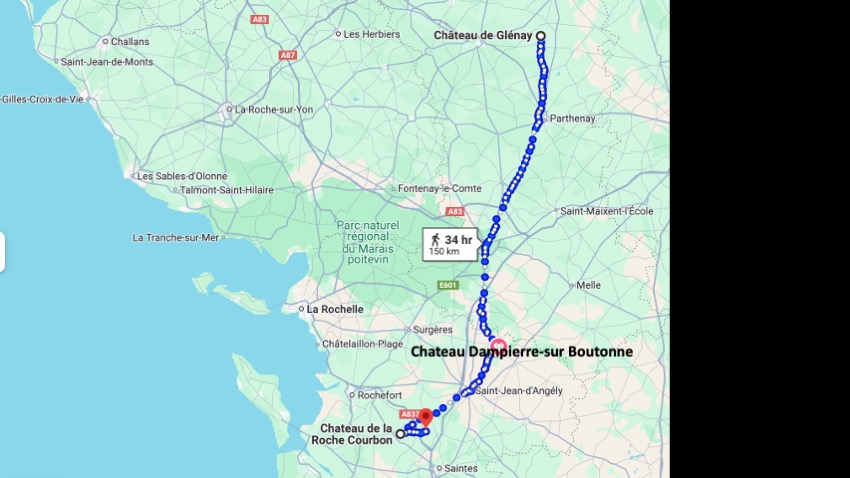
We imagine Rochefort as an estate neighboring the lands of the Marquis de Mouy in Saintonge, near La Rochelle but not including La Rochelle, and the lands belonging to the family of Marie d’ Aiguillon, which are lands around Glénay and all the way to the coast.
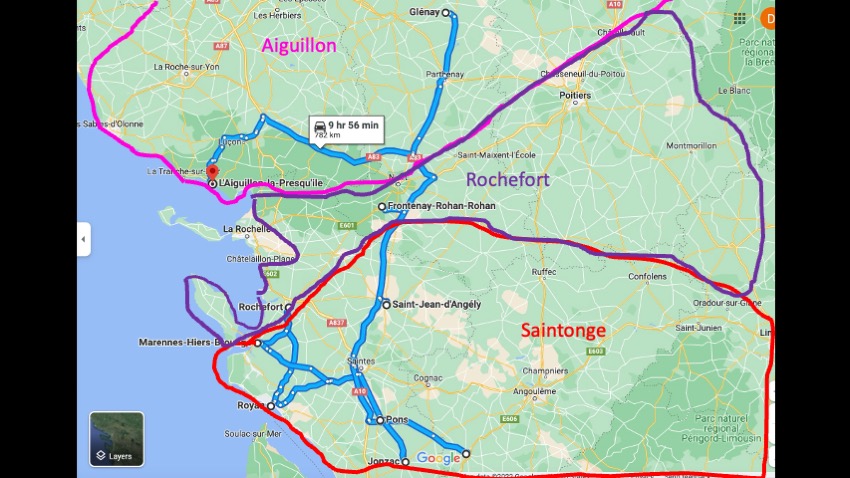
fictional estates: saintonge (athos), rochefort (charles cesar), aiguillon (duchess/lucien)
Raoul Emanuel in this fictional genealogy had a third, even younger brother, who joined the church, the Vicomte de Bragelonne, and it was his estate in Blois, that Athos inherited when he left the Musketeers and that title that he passed to his son Raoul when Raoul first arrived in France from Venice. In our story Raoul is different from Dumas’ story. He already has a title through his Venetian family, and since the beginning of our story has gained other titles in the service of Louis XIV.
For the fictional château of the Marquis de Mouy in Saintonge we use images of the château de la Roche Courbon.
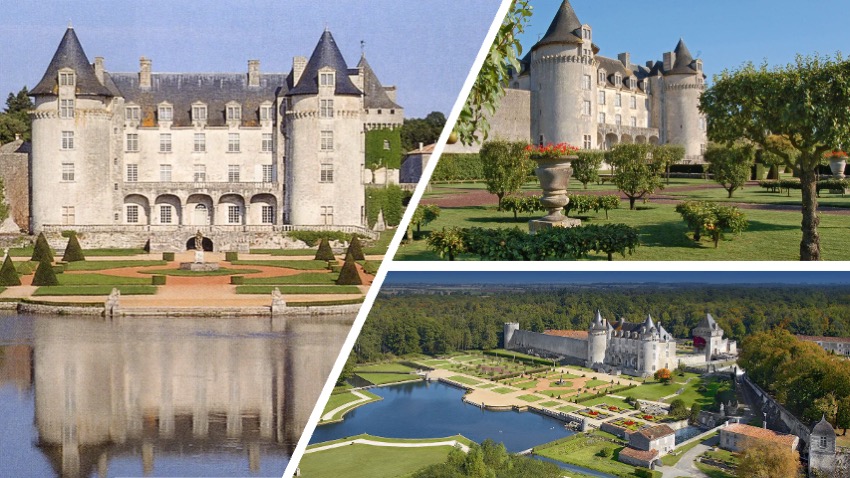
château de la Roche Courbon
For the fictional château of the Comte de Rochefort, we have sought inspiration at the château de Dampierre sur Boutonne (which happened to be the family home of M. de Gondi!)
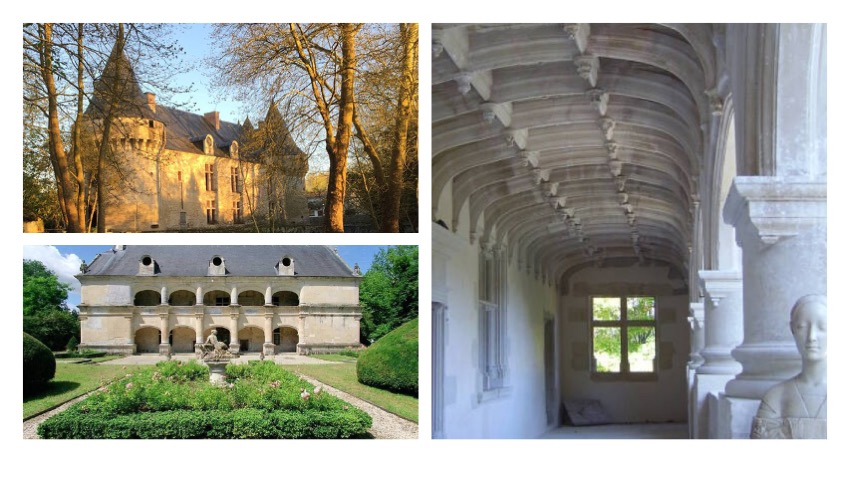
château de Dampierre sur Boutonne
Both these châteaux as well as Glénay are at the west part of France.
Useful Sources:
Charriere, E. 2016, “We Must Ourselves Write About Ourselves:” The Trans-Communal Rise of the Novel in the Late Ottoman Empire. PhD Dissertation, University of Michigan (especially chapter 3).
Dumas, Alexandre, The d’ Artagnan Romances
Maund, K. and P. Nanson, 2005, The Four Musketeers: The True Story of d’ Artagnan, Porthos, Aramis and Athos. Tempus.


 Twelve Years After