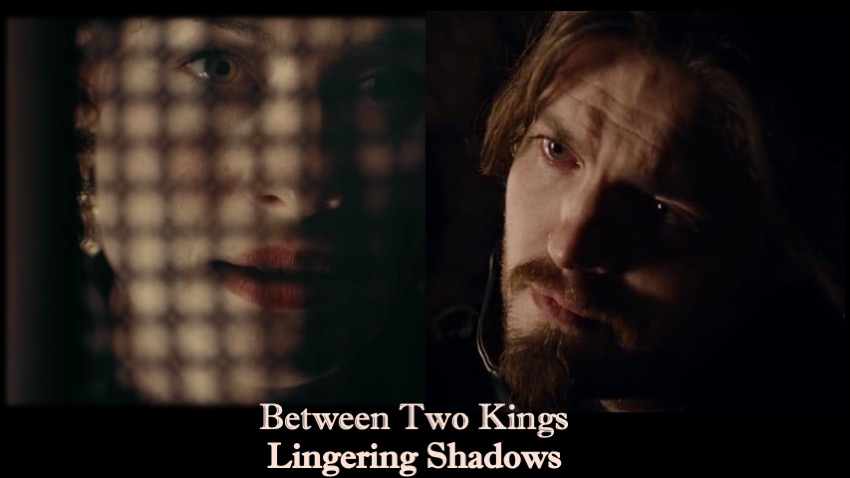
The bedchamber is imbued with hazy light from a handful of flickering candles and the glow from the fireplace. There are others here. Shuffling sounds, and distant hushed voices that she recognizes: the physicians, the nurse, and the midwife. She cannot understand their words. Only Sophia’s whisper reaches her. “I will return in the morning,” Sophia promises.
He is here too. She recognizes the warmth of his familiar presence, the tender pressure of his hand resting atop hers, his deep melodious voice speaking softly, and beneath it, like a lingering echo, a boyish timbre, playful and inviting, calling her Sandretta.
“A man in a boat washed ashore in the night. Like Odysseus at Scheria! Let us go see, Sandretta!” He seizes her hand.
A smaller hand slides into hers. “You can be Nausicaa and I will be Achilles.”
She giggles. “They never met, silly!”
They were in the salon with the baby. He was with her and so was Lucien. Lucien, his brother. This she remembers. Lucien, the boy who wanted to be Achilles, the boy her mother called Sweet Mischief. Sophia and Madame sat next to her in the salon, and Sophia asked the baby’s name, and the baby was with her, safe and well. This she remembers too. She held the baby in her arms: Léon, my little lion, we will fight to the end together.
Then she was tired and he carried her to bed. She was heartbroken to leave behind her precious daughter, so happy to be with her Maman, so proud to be the older sister. Her sweet girl, who has endured so much with such courage, who made her a shell necklace, and brings her bouquets of wild flowers every day. The forget-me-nots too. No, he brings her the forget-me-nots, she can see it in his eyes. Gray eyes, with flecks of hazel, like his brother’s. How did she miss that?
“I will protect you,” the man says, “as is my right.” His is a different voice, unyielding and sharp. No boyish timbre beneath it, only cold calculation. His features are obscured in a hazy glow, but she knows him. Rochefort.
“It’s just a dream.” Athos is at her bedside and the light in the room is no longer hazy, but it is night. His eyes are fixed on the physician standing at the other side of the bed.
“Thankfully, the fever has broken,” Dr. Guenaud asserts with an encouraging smile and signals to the nurse to bring her a glass of water. “Madame, it is important that you drink it all,” he advises. “This was not as bad as the last time, so we will take it to mean that you are getting stronger.”
The fresh cold water revives her. “How long this time?”
“Only two days,” Athos says. He helps her sit against the headboard, his eyes meeting those of the physician’s. The silent exchange irks her. It irks her that she knows so little about everything.
“There’s more, isn’t there?” she pushes.
“I will leave you to it,” Dr. Guenaud tells Athos. He signals to the nurse and they motion to the door. “Let us give them privacy,” he says, as he closes the door behind them.
She hands Athos her empty water glass. “This sounds serious.”
He shakes his head as he sets the glass on the bedside table. It surprises her that he hesitates. It is not like him. He attempts an awkward smile. “I apologize for the teasing. Lucien too. He was very upset afterwards.”
“It was not your teasing that made me sick. Enguerrand is not a bad name. Just…”
“No, no,” he sounds embarrassed. “It was a childish joke. Our mother was not amused.”
“I cannot believe I was teased!” she clicks her tongue frustrated. “Ach! I cannot stand to be this way!”
He reaches for her hand. “Léon suits him perfectly.”
“I had this…” She hesitates too and it is not like her. She wishes her mind was clear. “ It must have been a dream. I don’t know when it was. It has been difficult for me to measure time.” He presses her hand reassuringly. “But I found myself at a house. Not our house in Venice, although at first I thought it was, because it felt familiar, and it had large windows to the sea.” She notices a change in his eyes, now glowing with warmth and intensity. “Francesca was there. I knew it was her even before I had stepped into the room where she waited.” A small embarrassed chuckle escapes her lips. “Fever plays evil tricks…”
“No, no!” The hazel flecks dance in his eyes as she has never seen before. “It was her,” he insists, and his voice carries the boyish timbre that she almost remembers.
She swallows hard to hold back the tears stinging behind her eyes. They annoy her more than being ill. She is not a weeping woman. “Yes it was Francesca. She waited for me there, with a redhead little boy. Is it not absurd? An absurd feverish dream. But I think I dreamed of Raoul and of Bianca before they were born.” He is nodding, his eyes encouraging to continue. “She called him Léon.”
“There isn’t an endorsement more validating.”
“But your mother is right. A family name is necessary.” He begins to object but she stops him. “She is right, Athos. You are the duc de Richelieu. Names matter. They matter even more than before.”
“What, now we call him Enguerrand?” he retorts, peevishly.
“No, not Enguerrand,” she fixes her eyes on his, and he understands her meaning immediately because he springs to his feet and begins pacing the room for a few moments.
“No! Do not ask me to call my son Armand!”
She understands his frustration. She shares it. “That was Treville’s name too,” she ventures.
He chuckles angrily, shaking his head. “That is very clever.”
“Convenient. I am not very clever these days.”
Athos draws in an exasperated sigh and returns to sit at her bedside, reaching for her hand. “I cannot believe we are fighting over a name.”
“And yet…”
He lowers his eyes. “I know. You are right. My mother is right too. A name is everything.”
“I offer a compromise. Léon Armand Athos.”
“What? No! Athos was the secret name my mother gave me. It became the nom de guerre for a man… for a soldier…with too many sins, too many vices…”
“Hear me out. I may not be as clever as I used to be, but I think this is important.”
He crosses his arms over his chest, frowning. “I am listening.”
“Richelieu never acknowledged you and Lucien as his sons. He gave your mother power, however, so now, after his death, she is free to do it, and with no need for approval. You are the eldest son, so your decisions must be calculated and political. They reflect not just on you and Lucien but on our children and on Lucien’s children. It is up to you to ensure that there will never be the remotest hint of illegitimacy for any of your heirs. Athos is not your first name. As you say, it is the secret name your mother gave you. It is your nom de guerre. It denotes all that you have been and have accomplished as well as all that marks you as illegitimate in the eyes of those who will be the enemies of the duc de Richelieu, those who are your enemies already. Why resort to a defensive position? Put it out there, your name, who you are, for all to know. Put your name next to your father’s. You are Richelieu’s heir, you–Athos, your mother’s son, the Musketeer, the soldier, you–and this is true for your children and your brother’s children.”
“And this is you, not being as clever as you used to be?”
“I think it is what your mother has been trying to say but she is noble and subtle, and I am neither.”
“Alright,” Athos agrees with a faint chuckle. “Alright. Léon Armand Athos it is. My mother suggests Easter Sunday, the day after tomorrow, for the christening.”
“If you don’t upset me too much, I promise to be there.” She leans her head back into the pillows and closes her eyes. The room spins gently around her, and a sharp pain in her side reminds her she’s been speaking for too long. She starts to cough.
“Alessandra!” He hurries to pour water in her glass.
“Please don’t fuss. I hate it when people fuss. It will pass.” She manages a deep breath and opens her eyes, forcing a smile. “There, it’s better, see?”
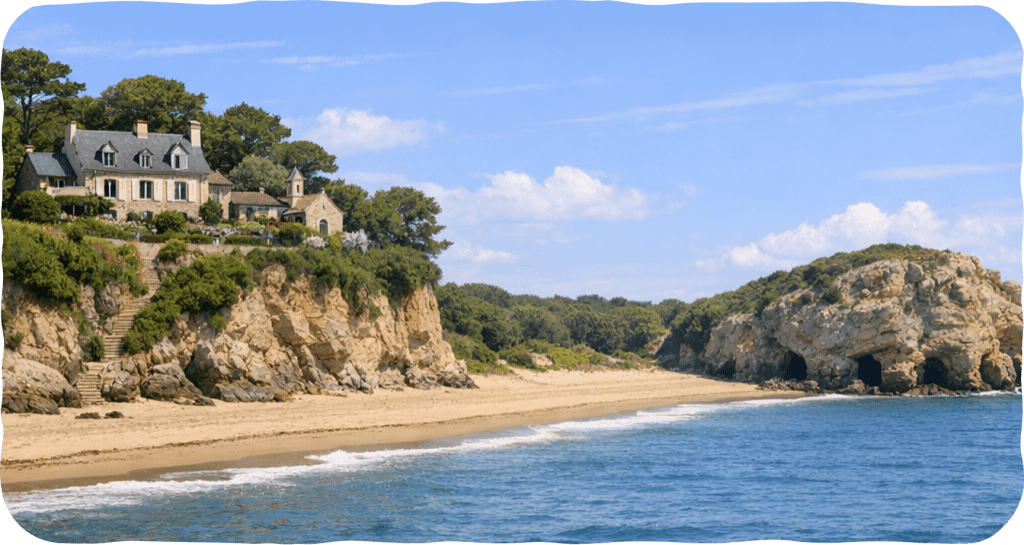
He frowns. He is not deceived. “This is what I must discuss with you most urgently,” he says. “Lung fever is not a trifle, and I am not fussing. Guenaud and Prujean agree–and believe me that is rare—that you should be somewhere with clean, fresh air. Near the sea is what they recommend especially now, in the spring and summer. So I was thinking…” he hesitates again, “I was thinking about a cottage I know. Nothing too grand, but it is comfortable…”
Something about his demeanor, about his tone compels her to probe: “Have I been there before?”
“It is not too far for you and the baby to travel safely. Only a few hours and the warmer weather permits a comfortable journey.” He evades, she notices. “We cannot take all the men, of course, and we do not need them. They will remain with my mother here and Lucien will decide how they will escort the families back to Paris. They all must return in the next few weeks. Gasparo will be with us, and Giulia, Dr. Guenaud, the nurse, and Bianca’s maid. Dr. Prujean will stay with my mother at Glénay and so will Madame Bourgeois. There are many infants at Glénay besides Léon. Madame Bourgeois’ daughter, however, will join us at the cottage. And of course Bonne will be with us. This is her grandparent’s house.”
She decides not to ask again if she has been at the cottage. The answer is clear from how much he deflects. “Is this the cottage that Bia talks about?” she asks instead.
“Yes, where she picked the seashells.” He sounds relieved.
“And that is where Bonne’s grandparents live?” Tatie May and Guillaume, Bia calls them, and something about the names is familiar.
“They remained here at Glénay until a few days ago. Almost everyone from the surrounding countryside was here…” he pauses as if he has spoken too much.
“Until Marchal arrived?”
He frowns. “Madame, you are too clever.”
“You will not tell me, will you?”
“Not until you are strong enough,” Athos says sternly. “And this we will not negotiate.”
She sighs, resigned. “I would like to see it. I would like to see that cottage.”
⚜️⚜️⚜️⚜️

 Twelve Years After