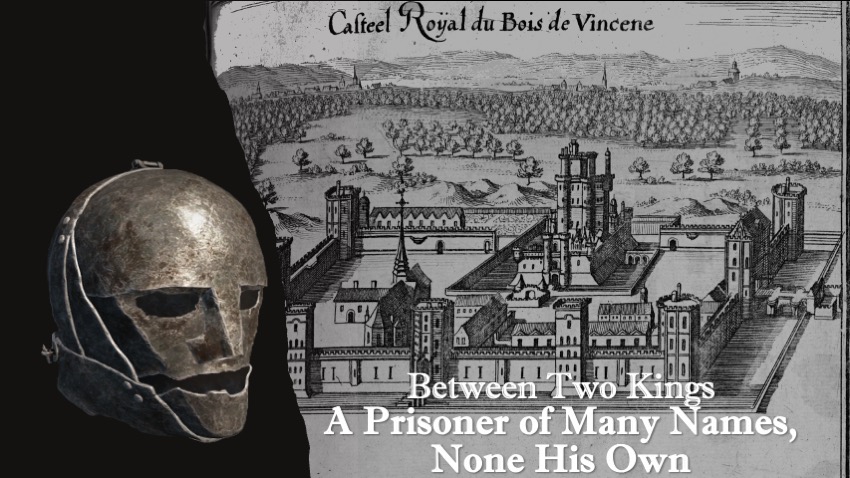
M. de Ronan wakes up with a jolt. For a moment he stares at the canopy above his head, confused, trying to remember where he is or what might have stirred him, and realizes that Layla is not lying next to him. Alarmed, he sits up quickly against the headboard, everything returning all at once. He knows what time it is, the darkest hour before the break of dawn, and their chamber is cold and dark, only a muted glow from the fireplace where the embers are burning their last.
“Layla?” His voice is still hoarse from sleep. He coughs to clear it, and repeats “Layla”?
He can hear her breathing, and as his eyes adjust to the darkness, he can discern her form, seated on the settee across the fireplace, hugging her knees to her chest—and knows what stirred him. He springs from the bed, snatching one of the covers. “Layla, sweetheart!”
“Did I wake you?” He recognizes the trembling in her voice even though she is trying to mask it.
“No, of course not.” She is only wearing her silk shift. Even without touching her he knows she is freezing. It happens to her always, when it is all over. Carefully, he wraps the blanket around her shoulders. “A little water?” She nods again, so he brings her a glass of water and she drinks thirstily. “Can I sit next to you?” When this happens to her she prefers not to be touched, but she nods again. He reaches for her hand, tentatively, but she seizes his hand, so he pulls her to him– instinct and experience guiding his every move. She is indeed freezing, so he keeps her in his arms and tugs the blanket around her. “Was it bad, my love?”
“There have been many worse.” She buries her face in his chest, and he strokes her back gently, he can feel her getting warm, her heart slowing, her breathing too. “And I disturbed you…”
“Nonsense.” He kisses the top of her head and she raises her eyes. She is pale still, he is alarmed to see dark circles under her eyes. “My love, has it been happening often?”
She pulls herself from his embrace and smiles wearily. “Not for a while, no. Foolish me. Every time I think it is past and gone, it catches me by surprise.” A small irritated chuckle escapes her lips. “I should not have gone to Bicetre with Marie Cessette.”
“You said, it was all fine. That the children have been removed to a good and safe home at Saint Denis. That the new roof for the church is finished.”
“They even let the goldfinches stay.”
“Exactly.” He smiles encouragingly but her face darkens again.
“It’s never good, JeanPhilippe. It is never good for me to go back. I don’t think it can ever be, no matter how much that place changes.” She picks up the glass and drinks some more water. “But it is not only that…”
“Is it the family? They are at Glenay and they are safe. Your sister had a baby daughter and they are both strong and healthy. We know all this.” She shakes her head. “Is it your aunt, then? They will find her.”
“I worry about Raoul,” she confesses.
“Raoul?”
“I can’t explain it. He has changed, JeanPhilippe.”
“We all have.”
“No, not that way. He has changed.”
This is no time to argue, besides he trusts Layla’s instinct, and that bond between her and Raoul which, in the past, sometimes, M de Rohan envied. “How about we return to bed?” he suggests gently.
She smiles, taking the hand he offers. “Never, never change. Promise me?”
He smiles. “I promise to try”. They walk slowly, arms wrapped around each other back to the bed, and past one of the windows which overlooks the street, the Rue des Francs Bourgeois. M. de Rohan points outside the window on the street, where, despite the darkness, the shapes of two men standing across their house are easy to discern. “We can be certain of one thing. Fabien will never change.”
“Two of his men—no one we know— followed Marie Cessette and me to Bicetre. In Musketeer uniforms. They even bowed to us from their horses. I suppose that is the point. Fabien does not hide. He wants us to know we are under surveillance.”
They climb into bed together, under the covers, and sit with their backs against the headboard. She leans her head on his shoulder. “That is the other thing that bothers me, I suppose. All this waiting. I am not very patient.”
He chuckles. “When did that change? I was your commander. I trained you to be patient.”
“It never worked, JeanPhilippe. I rarely slept in those days.”
He clicks his tongue irritated by his big mouth. “Forgive me,” he whispers.
She kisses his hand and slants him an impish smile. “I can never not forgive you. It’s a weakness that I cannot change.” And then in a more serious tone: “Why can’t we just break him out of Vincennes? Why wait until he gets transported? Get it over with now. I can’t stand the waiting. Fabien breathing down our necks. It is not more difficult than anything else we have attempted.”
“I can’t stand Fabien breathing down our necks either. But we have only one chance with this, Layla.”
“As opposed to every other time, every other challenge we faced, when we had alternatives, you mean?” He sighs and leans his head back against the headboard. “And why is Fabien still Captain of the Musketeers, can you tell me? I thought he was to be Commander of something-something-very-important-sounding?”
“Because the King delays the promotion. Some say that the King is not entirely pleased after what happened at Zola’s. Captain Marchal’s rectitude and adherence to duty and honor have been generally praised and his faux pas quickly silenced. Now, if I were still your old lieutenant I would have thought all that enough of an explanation–if I ever needed one. But…” he slants her an impish smile, “I have changed. I can see much more and I blame it on Raoul— his way of thinking brushes off on you–and I blame it on Marie Cessette as well,” he chuckles, “those two are very similar in many ways. Keen observers, which I never was, seeking the real reason behind the superficial one, which I never did. I was a soldier, like Fabien.”
Layla sits up on the bed. “And what do you see, JeanPhilippe?”
“I see a clever calculation and a waiting game. Louis has more than just Henri to worry about. Fabien’s faux pas at Zola’s exposed Louis to everyone who was there, and that was everyone. Spies, Frondeurs, even the envoy of the Sultan.”
She narrows her eyes, perplexed. “But the Fronde ended.”
“On the face of it. It occurred to me, after Zola’s, that nothing is as it appears to be. Louis keeps his cousin in exile. If the Fronde ended, why is she kept at Saint-Fargeau? Condé remains in Spain. Many of their friends were at Zola’s. Louis has appeased them, perhaps, but he has not crushed their defiance, and he must–especially if there is a more legitimate contender to the throne. Fabien’s intervention at Zola’s, no matter how morally upstanding, made Louis look weak.”
“That is not good.”
“Not at all. Because on the one hand, Henri Bernard, if he is revealed for who he is, gives Frondeurs a new cause to rally behind, a cause that is stronger than Beaufort’s, and on the other hand… Spain is gathering her troops.”
She gasps. “Again?”
“In the Spanish Netherlands. I have… See, this is where Raoul’s way of thinking is brushing off on me, I fear. Anyway, I have my… sources,” he mocks the word, “these days. The Spanish are moving troops near Valenciennes.”
“But… Louis married Spain supposedly to stop this. And Spain is bankrupt!”
“Spain is always Spain. They will not relent, not if they can have Condé himself, leading their troops. Spain will not give in to Louis who can’t control his own Captain of the Musketeers— they know all about the embarrassing incident at Zola’s. Do they know about Henri Bernard? I would never underestimate a man like Vargas.”
“Condé wouldn’t lead the Spanish… He’s French…Would he betray his own…”
“King? He is not convinced about Louis either. And whether he too knows the truth about Louis and Henri Bernard makes little difference, because Condé has his own claim to the throne, and he is a hero, he is well-liked, and has the loyalty of many French troops who’d follow him anywhere. All of Normandy can rise up in his name, again; right there on that same border where Spain now gathers her troops. That is not counting his many friends, still at court. And…I assure you…they were at Zola’s, where Louis showed himself unable to contain his brother as well as his Captain of the Musketeers–in their eyes a vulgar brute from the street who should never have been raised to that position. It was all patched up elegantly, but it was patched up, nevertheless, and by Louis’ Venetian spymaster, who happens to be the son of a notorious, and unrelenting Frondeur, who, in turn, defied Louis and has ridiculed his brutal Captain of the Musketeers again and again, most recently by charging into the Louvre and by helping rescue the duc d’ Herblay from prison…”
“There is no proof of that!”
“No, and thank God, for your uncle and for our old Captain, and for General du Vallon, and for your father too. But neither the street, nor the nobles need proof to be emboldened. That is what they have become: emboldened. Which is why Louis delays Fabien’s promotion. He’d like to increase Fabien’s powers but how can he now?”
“And who is there to replace Fabien but M. Mancini, the Cardinal’s most incompetent nephew,” Layla says dismissively. “And Condé despises Mazarin!”
“See? See how Raoul’s and Marie Cessette’s way of thinking brushes off on us both?”
“In other words,” Layla continues to calculate, “ if Louis is still negotiating for Condé’s return, that must include some show of obedience on Condé’s part that is meant to crush any aspirations of the nobles of the Fronde lining behind him. To that, Condé would posit his own demands, especially if asked to show himself repentant and obedient. In such a negotiation, M. Mancini, whom I am sure Condé despises as much as he despises his uncle the Cardinal, becomes a pawn…”
“And what happens to Fabien depends on what happens to that pawn.”
She looks at him puzzled. “When did that fool, Mancini, become so…necessary? I mean… Captain of the Musketeers!”
M. de Rohan shrugs. “I am not sure he is important. He just happens to be at the right place at the right time. Mazarin insisted that his nephew become Captain, that I know. The Cardinal is keen to ensure wealth and positions for his family but what leverage the Cardinal may have over Louis, I do not know. I am sure that Raoul knows.”
“And you said that Mazarin was at Zola’s,” Layla says. “Which means that he is very much involved in this bargaining. And now, that fool, Mancini, has taken over as governor of Vincennes in his uncle’s place. Perhaps it is good for us, even though a fool can be as dangerous as any fiend.”
“That is why we must be patient and tread carefully in our planning. The waiting game will end. Sooner or later, one of them will make a move and whether it is Louis, Spain, or Condé, or my father–remember he has stakes in this waiting game too–things will change and fast. That’s why we cannot afford to be impatient now. We play a hand in this bigger game and it is a powerful hand but only if we play it right. If we fail, it will be devastating to all–to innocents, your family, the family of your sister, the families of our best friends.”
Layla sighs and returns to sit next to him, leaning back against the headboard too. “That does not make me feel any better JeanPhilippe. And I have no desire to sleep.”
He kisses her hand, slanting a mischievous look. “There are better things to do in bed than sleep.”
She mocks a frown. “You are becoming a very very bad man, Monsieur!”
He feigns a sigh and a despondent tone, and kisses her hand again. “Alas, Madame! A very very bad man but always hopeful.”
⚜️⚜️⚜️⚜️
“Well? What do you think?”
They have been standing around the table in the salon, the three of them, Layla, M. de Rohan, and Marie Cessette who arrived early, with six pigeon post messages sent by Raoul between midnight and dawn. They have laid them out on the table in the correct order–determined by a series of seemingly random numbers–and they have been deciphering them, using a cipher Raoul gave M. de Rohan before he left Paris. Layla is working fast on the cipher, rewriting the messages.
“Catherine de Renard, her son, and her husband are responsible,” M. de Rohan begins reading, picking up the first message. “Saintonge. Madame was taken there, and she is with child and may be very ill.”
“Good God!” Marie Cessette gasps.
“Why Saintonge?” Layla interjects and M. de Rohan shrugs. “He does not say.” He picks up the next message. “They attacked Saintonge. Comminges is killed. De Winter is killed. Lucien has taken hold of Catherine de Renard.”
“Good riddance to them all and to Sourface,” Marie Cessette exclaims, relieved. “And Madame?”
M. de Rohan shakes his head. “Catherine de Renard claims that she is dead.”
“Impossible.” Layla says.
“Raoul agrees.”
“And?”
“What else does Raoul say?”
M. de Rohan sounds perplexed as he continues reading: “Nothing about Madame. He writes instead: ‘Our friend has lost his mind. Calls himself many names. One must be Thomas. An exchange must be made. Delay as much as possible’. ”
Marie Cessette narrows her eyes, equally perplexed. “Thomas?”
“That’s what the message says. Thomas. Unless there was a mistake with the cipher.”
Layla takes the message from his hand and retraces the cipher a second time. “No mistake. He says ‘Thomas’,” she concludes. “Why Thomas?”
They stare at each other for a moment, baffled.
“The only Thomas…that is at all connected is Thomas de Renard, but what does he have to do with Henri?” Marie Cessette wonders.
Layla shakes her head: “And what sort of exchange? Where? With whom? How can Henri Bernard pretending to have lost his mind and calling himself Thomas can delay anyone? And what if…” In her mind, Layla returns to the discussion from the night before. “What if…we miss our only opportunity?”
“We’ll have to create another,” Marie Cessette sounds determined. “For the moment we must do what Raoul asks.”
“Yes, but we don’t fully understand what Raoul has in mind,” Layla counters. “This is too dangerous to rely on.” She points to the papers on the desk. “This! Even in my most impatient and reckless moments I would not act on a plan based on just this!”
M. de Rohan has been pacing the room, frowning. “No, no, it will not do,” he agrees.
“And then, if Henri is supposed to pretend that he has lost his mind…calling himself different names… calling himself Thomas…how do we tell him to do this?” Marie Cessette frets.
“In all our planning, we never thought to breach Vincennes,” M. de Rohan says. “Our plan from the beginning was to intercept him as he would be transported to wherever they intend to take him. Henri is kept under strict orders to be seen by no one, the current–let’s call him provisional—governor, M. Mancini included.”
“M. Mancini has been complaining about having to make preparations for a royal prisoner, who–he thinks–is Condé, M. le Prince,” Marie Cessette turns to M. de Rohan. “Remember what he was saying at Chevreuse’s salon?” He nods.
“So, M. Mancini is at Vincennes?” Layla sounds as if she is making a calculation.
“No of course not,” Marie Cessette says. “He would not be caught dead there.”
“M. Mancini has no apartments at Vincennes,” M. de Rohan affirms. “Henri is kept in the governor’s apartments. We know, because M. Mancini was complaining about it, as well as from what M. de Beaumont tells me. A guard has been assigned to Henri Bernard exclusively to be his servant, and he is visited once a day by M. Rochois, M. Falaize, and M. Bennart. Fabien comes with them once every week.”
“Then we must speak to M. Rochois, M. Falaize, and M. Bennart,” Layla says.
“We cannot ask our old comrades to endanger themselves thus, can we? And to place them in an impossible position whereby they must endanger themselves, acting against their Captain and the King or betray their vow of friendship to us!” M. de Rohan objects. “They have risked too much already.”
“Yes, they have. And willingly,” Layla insists. “Which is why it makes sense to speak to them.”
M. de Rohan clicks his tongue, unconvinced, just as they hear someone knocking.
Faster than thought, Marie Cessette and Layla sweep the messages and the cipher from the table.
“Enter!” M. de Rohan says.
Ciaran makes a small bow. “An officer to see you, Your Grace. Says it’s urgent.” He steps aside so that the officer strides in hastily, hat in hand.
“M. Morant!”
The officer bows. “Mesdames. Lieutenant. Her Majesty the Queen Mother asks to see you immediately.”
⚜️⚜️⚜️⚜️
“We have little hope, is that not the truth?” Marie Cessette paces the salon wringing her hands. Every now and then she stops by the window and frowns. “They never leave, M. Marchal’s men, do they?”
“It is Fabien’s way of reminding us of our place and his,” Layla tries to appease her. “As for hope. We do not lose hope. You said it yourself-if we miss our opportunity we will create another. And we still have our original plan. It has not changed. If Henri is moved–which will happen–we move to intercept him.”
She worries about Marie Cessette. It occurs to Layla that unlike JeanPhilippe, Raoul has left Marie Cessette alone too many times and for too long. She does not blame Raoul but she can also see where her friend has been left unprotected, and, being wife of the Spymaster of France, an easy target to those determined to harm Raoul–people like Fabien.
Marie Cessette, no matter who her father and her husband are, in the eyes of polite society will always be the poor orphan of a foot-soldier. Thus, the smallest indiscretion on her part is unforgivable because it looks as if she defies those very people who condescended to include her among them. Layla has the privilege to avoid polite society if she chooses. Still, she hears the gossip and reads the pamphlets just like everyone else, just like Marie Cesssette.
Marie Cessette has become a woman of ‘a certain reputation’. Even being abducted is added to her list of infractions that includes her fashionable salon–the envy of many–her friendship with the Grande Mademoiselle, her intervention on the night of the battle at Saint-Antoine, her scandalous flight to Saint-Fargeau, the King’s disapproval of her, and, more recently, her supposed attraction to JeanPhilippe–a clever ruse but one that costs Marie Cessette dearly and JeanPhilippe nothing, for he is praised as a man of fashion instead.
As for Henri Bernard… At first, Layla found it difficult to forgive Marie Cessette for that indiscretion. She abhorred that Raoul was being betrayed, only to find out that the truth is far more complicated. It is not just that Raoul acknowledges his wife’s sentiments for another man and still is eager to help that man. It is that he, too, has changed, and in ways that Layla cannot grasp; the darkness that lurks behind his eyes; the brooch on his costume made from a woman’s headdress, an oriental headdress similar to those M. de Roberval has sent from Constantinople shaped like a rose. JeanPhilippe is right, those two are very much alike, and theirs is a marriage as different from hers with JeanPhilippe as a marriage can be.
“Why don’t you stay with us, sweetheart?” Layla ventures.
Her heart sinks to see her friend’s eyes gleaming with tears even though she attempts a smile. She puts on a brave face, but of course the gossip upsets her. “How would that look, Layla given the gossip about me and JeanPhilippe? How would it look for you?”
“Let them dare!”
Marie Cessette shakes her head. “For myself I no longer care. I have defied their rules too many times. But, my love, even you are not immune.” She points out of the window. “He–Captain Marchal–he used my own writing against me at Saint-Fargeau. He forged my letters. And he is out there, reminding us of our place and his, just as you said.”
Layla crosses her arms over her chest peeved. “I don’t care about Fabien at all. As for the vile gossip, I do not care for it either, and when it strikes–if it strikes–we will think about it, and only then. I want you to stay. You should not be alone.”
⚜️⚜️⚜️⚜️
M. de Rohan flings open the door of the salon. They heard him riding to the courtyard and then dashing up the stairs “bad news,” Marie Cessette whispered and she and Layla sprung to their feet.
He throws his hat to a chair as he marches into the room. “Layla! We must tell Marie Cessette…” He pauses. “Thank God, you are here!” he exclaims upon seeing Marie Cessette.
“I thought she should stay with us,” Layla says.
He smiles, drawing in a deep relieved breath. “Excellent.” He signals them to stay silent, closes the door, and returns, but moves closer. “I have news,” he whispers. The three sit huddled together. “I have a way to reach Raoul. There is an urgent missive from the King to the duc d’ Herblay.” Layla and Marie Cessette gasp in dismay. “No, no. It is good. And the Queen Mother sends him a letter too. We must all pretend we do not know that he is at Glenay, so the missive and the letter will be traveling with the royal correspondence that leaves in an hour for Rennes, La Rochelle, and Bordeaux. Everything will be as it must be only M. Morant is going with them, and…”
“M. Morant is an excellent choice!” Layla turns to Marie Cessette. “We trust him thoroughly.”
“I have already written to Raoul. If you two have letters, write them immediately. He will deliver them.” They motion to stand but he stops them. “One more thing. About Henri,” he adds with a smile. “M. Bennart…”
“He agreed!” Layla exclaims.
“He volunteered. Even without that old oath, he owes you his life and he will never forget fighting with you in Spain, he said. Marie Cessette you must write Henri a note, so he knows to trust us.”
Layla chuckles. “I knew it! M. Bennart would do it.” She presses Marie Cessette’s hand. “Nothing is lost, see?”
Only perhaps, something is indeed lost, and never to be regained, for as Layla finishes a quick letter to her family, and one special letter to Suzanne and Afonso, she realizes that Marie Cessette has written a letter to her family but not a letter to Raoul.
⚜️⚜️⚜️⚜️
He tells himself that it could have been much worse. This could have been an oubliette. It is not exactly lese majeste to let a man rot away chained to a wall in a dungeon. There are moments when Henri wonders if Louis has been more generous than another in his place, and almost immediately, he gets mad with himself for affording his captor even the smallest justification for this cruelty. He is forced to remain masked in the presence of others, including his boorish guard and the Musketeers who check on him daily. He is a man without a face and without a name. This comfortable room is another kind of oubliette and he has already disappeared.
“He refuses to take any food. He has not moved from his chair all day,” Henri hears the crude voice of his guard outside the door reporting to the Musketeers. They have returned, as they always do this time of day and always demand a meticulous report. If he eats, if he drinks, how much, if he takes his daily exercise–Henri wonders if they must know how many times he relieves himself.
“What? Open the door!” he hears one of the Musketeers order. By now, Henri recognizes their voices. This one is called Rochois and is their lieutenant. They are the same men always, and once a week their Captain comes along. Captain Marchal is Henri’s idea of a brute but his men are not too different.
He slides on the mask and sits back in his chair, just as the door opens. They can force him to hide his face but they cannot force him to eat or move; both can turn deadly if one persists but Henri does not care–he will provoke the brutes and remain as unyielding as possible for as long as it is possible. The brutes march inside and begin shifting through his clothes, upturning his bedding, and even poking the coals in the fireplace as they do every day. He wonders what it is they are looking for, or if they are looking for anything at all besides to intimidate. Their lieutenant, Rochois, fixes a threatening pair of eyes. “What’s this we hear about not eating and not moving from your chair, M. Dauger?”
Henri leans back in the chair fixing his eyes to the wall across from him and crosses his arms over his chest. His name is not Dauger.
“I see. We are being defiant today,” the lieutenant sneers.
“I will take care of that, lieutenant,” the Musketeer called Bennart says. He strides closer and leans over Henri. “Pompous arse. Most prisoners would be grateful they are not chained in a dungeon. I will drag you outside by the hair if necessary, and stuff the food in your mouth, until you choke.” He leans closer. “What did you say?” Bennart growls, although Henri has not spoken a word, and, immediately, he whispers, “remain as you are or we are both lost.” To Henri’s utter surprise, the Musketeer slips a scrolled piece of paper into his hand and hurries to add, “read and destroy it.”
“He says he will take food. So bring him something to eat”Bennart orders the guard. “And then take him outside for his walk.”
The third Musketeer, whose name is Falaize, chuckles loudly. “Albert, I always marvel at your art of gentle persuasion!”
⚜️⚜️⚜️⚜️
He unrolls the paper as soon as they have stepped outside. He can hear their lieutenant, Rochois, barking orders and the guard calling for food to be prepared. He gasps upon seeing her writing although she does not sign with her name:
“Do not fret. Your friends are close by. We need a distraction. They say the walls of Vincennes are lined with poison, so perhaps the air can make you lose your mind. Call yourself as many names as possible-names cleverly chosen- but Thomas must be one of them. Destroy this message immediately.
From a friend who loves you most ardently–”
He rips the paper and shoves it into his mouth, swallowing hard. They search everything in this room, and he does not trust that they cannot read the ashes. Does he trust this Bennart? Does he trust that this message is from Marie Cessette? No, but what does he have to lose? He is a faceless man without a name destined to be a prisoner all his life–this much is clear. He’d rather die.
He hears the heavy step of the guard outside the door and slips on the mask again, not moving from the chair. “Putain d’ enfer, I am not your valet,” the guard swears as he walks in carrying the tray with the food. “You eat that Dauger, or I will shove it down your throat before the pauldrons return.”
“My name is not Dauger!” Henri growls.
“Who gives a damn what your infernal name is,” the guard scoffs as he sets the tray on the table. “You can be the Holy Pope for all I care.”
Henri springs to his feet, and assuming the most sneering tone he can imagine, screams. “How dare you, brute! I demand you call me Your Grace!”
“Your Grace, eh?” the guard chuckles. “Well, Your Grace. You either eat this or I shove it…”
But Henri has dashed to the table and, seizing one of the plates, flings it against the opposite wall, screaming: “I am the great prince Louis! The greatest general France has ever seen!”
“Ingrate! How dare you speak his name! I served under M. le Prince. You are nothing like him!” the guard exclaims while fighting to push Henri away from the table.
“Alexander! That is who I am! The greatest general of all time!”
“Madman! Stop!”
Henri has managed to seize the water jug from the guard’s hands. He flings it against the closed door and it smashes splashing water everywhere. He begins to laugh a wild, manic laughter. “Thomas!” he is howling. “My name is Thomas! I demand that you call me Thomas!”


Great to see the new chapter! I am so used to seeing them early Friday morning that it is worrisome when they are suddenly not there 😊
This chapter has some sad undertones despite everyone’s attempts at optimism… Somehow I still doubt that Henri’s rescue will go as planned, though there are seemingly no reasons to expect a failure. There’s just something in the air that doesn’t bode well, it seems. But of course, things don’t look good for Raoul and MC’s relationship either. On the other hand, they may need some crisis in order to understand what their marriage, their bond means to both of them. I like how you keep subtly showing to the readers that they are in fact perfect for each other, and even people as different as Layla and Rochefort recognize it, while they don’t. I am pretty sure a crisis will arrive if/when the time comes for Henri’s departure, because Henri will certainly not want to leave for Hispaniola or anywhere else without MC, and with how reckless she herself has been where he is concerned, there may be a serious test for everyone involved. But I am sure there will be more, because the more I think about it, the more I believe that for Rochefort, Raoul is ultimately as expendable as Henri has been, so Raoul & MC will have plenty of opportunities to see each other in the right light 😊
LikeLike
Thank you for the great comment.
Raoul is a main character in our story and different from Dumas’ Raoul in almost everything except his first name.
We have changed his full name also. In Dumas he is called Raoul Auguste Jules de Bragelonne (cf. Man In the Iron Mask; reading of Porthos’ will), and he is the son of Athos and Chevreuse (after a one-night encounter).
In our story he is the son of Athos and Milady who is Venetian (real name: Alessandra Francesca Morosini). The Morosini family, historically, claimed four doges: Domenico (1148), Marino (1249), Michele (1382), and the most famous of all Francesco (1683; see below), as well as four dogaressas (wives of Doges): Aliodea (1471-2) who was known as Dea Moro and considered one of the most beautiful women of the century, daughter of Silverstro Morosini and wife of Doge Nicolo Tron, Contarina Contarini Morosini (1473-4), Laura Morosini (1585-1595), and Morosina Morosini-Grimani (1595-1605) wife of Marino Grimani and daughter of Andrea Morosini. Morosina serves as the inspiration for Alessandra’s aunt and Domenico as her uncle.
There is also the famous Francesco Morosini (1618–1694) a prominent sea captain who fought against the Ottomans at Naxos (in our story, Odysseus’ island), Candia (Crete), the Peloponnese, and Athens–(in)famously he bombed the Parthenon in 1687. In 1683, he became the Doge of Venice. We have kept most of his story intact; he is Alessandra’s cousin who helps Athos with information when Raoul disappears.
In our fictional version of the Morosini family, Domenico (who is the Doge) had a younger brother Andrea who was a well known historian/scholar and eloped with a Venetian painter (Lady Bianca). These are Alessandra’s parents. There was indeed a well known historian named Andrea Morosini (1558–1618) who indeed (like his fictional version) wrote the History of Venice (1623) among other works.
Raoul’s full name in our version therefore is Raoul (from Athos’ adopted father), Andrea (from Alessandra’s father), Auguste (to honor Dumas) Morosini–later Vicomte de Bragelonne (as per Dumas) and later Marquis de Normanville.
You are right, there is something sorrowful in the chapter and I think it is what resonates from the Raoul and MC story. We have several “romances” in our sequel. They involve the core Dumas and/or BBC characters: Athos, Porthos, Aramis, d’ Artangan as well as Lucien who is a BBC character and Rochefort who is derived from the BBC character and not so much from Dumas. There are also romances that involve original characters and the “younger generation”. Raoul and MC belong to this “group”, and we wrote their relationship based on a practice that was common in the period, the arranged court marriage. There are many complications. She is not, strictly speaking, noble (she is adopted by a nobleman) unlike all her (half) siblings. Still, she is raised as a nobleman’s daughter and specifically raised to become a lady-in-waiting at court, which is what happens. She and Raoul are very good friends but neither of them imagined being married to each other. His first love was Layla, and her first crush was Rohan but her first major love was also Layla. In many ways, they “see each other” very clearly. They like each other a lot. They are a very good “team” politically and socially. Theirs is a successful marriage vis a vis such court unions of the time. They are not “in love” however. She found solace with Henri Bernard. He did fall in love with the young noblewoman who saved his life. But will they find each other? It is a different kind of relationship vis a vis all the other romances in our story!
Thank you again!
LikeLike