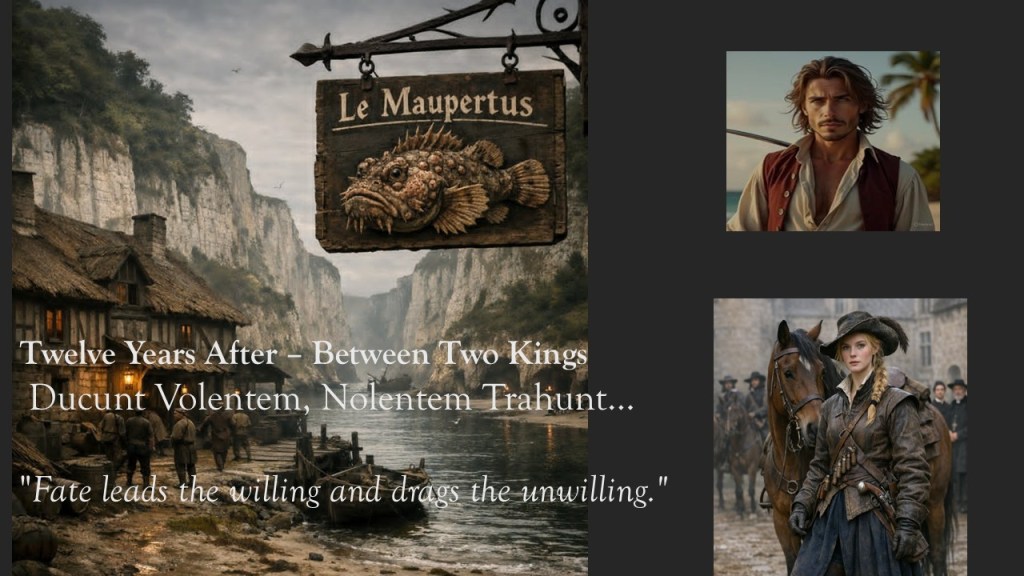
He knows he is dreaming… the smell comes first…dank, putrid…his chest clutches at the stench before she appears out of the gloom, her dress streaked with dirt, fair hair that once curled around a pretty face hangs lank and dirty from muddy water. She has a stumbling walk, arms reaching, mouth stretched wide into a soundless scream, her face begins to droop and soften, features melting like warm wax before his eyes…be quick! … grasp her hands before …
Amon Renacer jerks awake gagging, his face bathed in sweat, arms raised…unable to move. He struggles to roll to his side and lays still gasping for breath. Slowly he sits up, swinging his feet to the floor. He bends forward to lower his throbbing head between his knees, his stomach heaving…
Breathe he tells himself sucking in deep lungfuls of air …just breathe… His stomach churns and he has a sour taste in his mouth,. He closes his eyes to the horror of the vision wondering as he does every time…who is she? He does not recognize her face, but that means nothing. There are gaps in his memory. Dark empty places where time is suspended. He moves around them, uncertain as to how his life is joined together and what demons lurk in that darkness. He is cautious, watchful, alert to the slightest glimmer of recognition, curiosity or interest in the eyes of others.
“Captain.” He looks up into his sailing master’s worried expression as he pushes a flask into his hands. “Only water,” Odysseus says and watches Renacer drink deeply, then wipes his mouth with the back of his hand, “just a dream.”
“The same?”
Renacer shrugs. The dreams vary, disquieting at best and terrifying at worst. He does not understand the images, but he has learned that no amount of drink deadens his sleep. There are unknown people screaming, choking smoke thick as flames rising into darkening skies consuming everything in its path, or alleyways, cold and dark, shadows of spectral men with gleaming daggers looming high on dilapidated walls. He cannot run away or fight back, his legs and arms are frozen with fear. And still more dreams where he is awake, walking, the sun warm on his shoulders and glittering on water or on a ship smelling the salt air, cold wind in his hair, surrounded by an endless expanse of a gray green sea … only to realize that he is asleep.
“Perhaps you should talk to our new ship’s doctor,” Odysseus suggests with a helpful smile, “that is, whenever it is we return to the Belladonna.” Renacer grunts and looks away.
He had searched for remedies. A self-described doctor had insisted he should submit to bleeding to balance the humors, but that man was more witch doctor than medical man. A priest crossed himself and declared he was receiving messages from the divine. He spreads his fingers wide, considering his strong calloused hands, his strength and the scars that mark his body. Whatever the dreams are, he is a man who knows how to fight and puts his faith in his sword and his fist before the divine. On a ship out of Cadiz, he had clawed his way to consciousness into the tattooed face of an African man leaning close over him chanting softly. His name was Yaw and he claimed to be a shaman. Yaw asserted the dreams were a warning, “more bad to come friend,” the shaman said in his softly voice. Maybe the ‘more bad’ in Yaw’s parlance had indeed come and he was in it now.
Renacer stands up, pausing before trusting his legs. The room is bare but for one bed, a pallet on the floor near a brazier, and a small window with a scrap of cloth covering most of the grime. He shivers in the cold air, and murmurs gratefully as Odysseus settles a blanket over his shoulders. Renacer walks to the window to stare sightlessly into the rear yard and a gray dawn. He is cold and unsettled.
He becomes aware of a rhythmic slapping sound followed by a man’s grunt. He frowns at the sailing master. “His morning ablutions,” Odysseus grimaces, adding sarcastically. “I am grateful Captain, that your habits are abstemious in tolerable ways.”
The Inquisition priest, Padre Diego de la Rocha begins his daily devotional routine with the whip, moaning in ritual incantations of absolution as he swings the lash over his shoulder to his back. This is followed by gasps and moans from cloth dipped in cold water to lay over his wounds. More prayers, followed by silence which they know is when he is dressing and can be expected to unlock and tap on the door, the signal for them to join him to break their fast in silence before getting back into boat and continue their slow journey rowing upstream to their next destination. The crowds do not allow them to travel freely. Then there will be another inn with the same room, or a tavern where they sleep on pallets, the armed men rotating guard duty.
There is a knock at the door, the metallic sound of a key in the lock and the door is pushed open. The guard jerks his head for them to leave. Renacer goes first, stepping close to the guard, feinting a lunge in his direction, startling the man who growls and yelps at the same time. Renacer grins malevolently and turns to face the second guard who intends to shove him away, but seeing the invitation in Renacer’s eyes, the guard chooses to only gesture angrily to the stairs. Renacer chuckles, mocks a bow and goes down the stairs with Odysseus behind him. Four men from the Belladonna are grouped around a table, two others, Jabari and Anriquez sit apart murmuring to each other. He stops to greet the four men. Jacob looks up with eyes rimmed red from lack of sleep. He is the unofficial but acknowledged leader, “we are alright Captain. Be glad when this is done, that is, whatever this is.” Renacer nods in agreement and looks at Jabari and Anriquez, the two he commanded into the longboat. He knew their resentment of his position and did not dare leave them on the Belladonna in his absence. He sees the venom in their eyes for dragging them into this journey. Jabari and Anriquez indicate they want a private word, but he puts them off until later in the day. It would be dangerous if the priest or guards were to think they are plotting. The priest is already drinking from a bowl of broth.
“Prêtre,” Renacer’s tone drips sarcasm as he levers one leg over the bench to sit across from the priest, “keeping up your strength for the day’s exertions?”
Padre de la Rocha raises his eyes, which flicker to the men at the next table. He smiles at them and they look hesitantly between their captain and the priest. Renacer feels the poke of Odysseus’ elbow, a signal to not taunt the priest. They both know the crew is increasingly worried about the priest and the worshipful crowds. Seamen are notoriously superstitious, carrying salt in their pockets, tapping wood for good luck, whistling forbidden. Their lives are defined by omens and taboos. Rituals restore order, but the priest’s rituals are frightening them. Renacer watches the theatrics of the Inquisition priest in front of the crowds and knows his men, even Jabari and Anriquez, are listening.
“How much farther?” Renacer changes his tone. “I have not seen your use of a map.” He does not need a map to figure out their location. Well before the Inquisition ship tossed their grappling to hook the Belladonna, they had already passed the broad cove he knew well from previous visits. The cove was enclosed by the white cliffs of Étretat with its dramatic rock formations of arches and a tall pillar. The Inquisition ship had avoided the larger ports, choosing instead the northern coastline and a remote, little used estuary to take their prisoners by longboat into the interior. But the tributary is narrowing.
“Surely we cannot continue much farther on this stream,” Renacer pushes for an answer, impatient for the endless processional pace of their journey to end. “Is a village near or perhaps a monastery?”
“Perhaps,” Padre de la Rocha is enigmatic, rising from the table. Amon Renacer stays seated. He is not a man to frighten easily and regards the priest with a grim expression. He has remained unmoved by the threats of damnation, excommunication, and hellfire, and fed up with the self-righteous, preening postulations of the Inquisition priest. The wailing crowds of penitents disgust him. They are eager to push coins they can ill afford into the greedy palm of the priest in exchange for the sign of the cross over their heads and a muttered prayer aimed at the preservation of their souls. Let them all go to hell and if he had his sword he would help them to it.
Padre de la Rocha looks annoyed and signals the guards who start to move in. “Tell them to stop,” he orders the priest, “whoever has gone to so much trouble to keep this rendezvous secret and to get me this far will not appreciate your tactics.” Padre de la Rocha looks surprised at his outburst. The guards are ready to jerk him to his feet. Renacer snarls at the priest, “tell them to stop.” He had not decided to push back, but rather his temper did it for him. He was furious at the situation, the waste of time and the interruption to his plans. He does not want to be back in France. He gambles that bringing him this far means he is valuable to whomever it is he is intended to meet. Padre de la Rocha stares and then makes a dismissive gesture and the guard releases him.
“Good,” Renacer shakes out his arm, aware that his men are watching him, including the treacherous Jabari and Anriquez. Renacer considers making a move against the priest and his guards. Even with their weapons, his strong and savage crew could overpower them. But would Jabari and Anriquez join him or take the opportunity to kill him and make their own deal with the rest of the crew and the priest. He must be patient for the right moment.
“Besides, “Renacer says to no one in particular and with a touch of humor, “now I am curious as to why any of us are here.”
“We will stop soon, and take horses to the village,” Padre de la Rocha does not offer a conciliatory tone. “You will ride and your men will walk.”
“They will be relieved to know it,” Renacer replies, “not being much in the way of horsemen.”
⚜️⚜️⚜️⚜️
A small dock juts out into the tributary. Renacer studies the huts and the few low buildings belonging to a small tired looking village spread out along the banks. Trees are in thick clusters separated by scattered boulders and rocks. The priest climbs out of the long boat first, directing the oarsmen to tie up the boat on the weathered dock. The crew and Renacer follow the priest.
Two horses are waiting in a small yard fronting a stable. Padre de la Rocha waits for Renacer and Odysseus to mount their horses. Renacer leans down to the priest, “we had better not be stopping every half league for your penitents Prêtre. Or I will go ahead of you.” The priest looks astonished. Renacer has a grim smile, “surely you trust in the divine to me to get there safely.” He gathers up the reins, “where we are expected?” The priest hesitates and then shrugs.
⚜️⚜️⚜️⚜️
The tavern is a long rectangular building, a second story above. Inside, there is a damp moldering smell of rancid cooking grease, cheap wine and dirt. There are windows set within small alcoves and light seeps into the room through the circular smears on the windows, evidence that a cloth had once been used to move the dirt around. The floor had recently been swept, tables wiped with a sour smelling cloth. Renacer counts three men at tables in the back of the room, sitting casually, long legs splayed out. An older man is behind the serving bar, pouring wine into tankards. There is no obvious display of weapons, but that means nothing. The Inquisition priest sits alone at a table, his guards behind him. He pulls out a Breviary and starts to read, his lips moving silently with the prayers. Renacer wonders what other books would be in the pack of an Inquisition priest. He hopes he will have no reason to find out.
Two men are sitting at a table in one of the alcoves. An older man, wearing a black cloak, is watching them approach with a faint expression of amusement and interest. The second man, also cloaked in black, is looking at a paper on the table. Renacer grimaces, clears his throat to speak when the second man abruptly looks up. Renacer stares, registers the subtle shake of the man’s head and clamps down hard on his shock. He shifts his gaze back to the older man, deciding the best option is his anger. His eyes narrow, he curls his upper lip to bare his teeth, a deep growl forming. He sets his hands on the table, leaning over it, prepared to demand explanation.
The door smacks open, a rush of fresh air and a woman enter followed by three armed men. Soldiers… is Renacer’s first thought and then he sees the crosses and details of clothing …worse… the men are priests. He glances at the Inquisition priest who has a sour expression. The guards accompanying the Inquisition priest immediately turn in their direction and in the back of the room weapons appear on the table. No one brandishes a weapon, but they are clearly visible. The Inquisition priest speaks to his guards, ignores the armed priests and turns back to his Breviary. Renacer looks at the woman.
She is a lady, walking with supreme confidence into the room. Renacer scraps back his chair and stands, bowing, as do the other men, including his crew, slowly and slightly awkward. Wealthy… he thinks as she inclines her head acknowledging their gesture of respect. She bears the attitude of expectation and authority …aristocrat. She is wearing an interesting costume that includes a broad brimmed hat, a military doublet over a skirt designed for a woman to ride astride. He has seen a skirt like that before, but he cannot remember where or who was wearing it. From the corner of his eye, he can see the men looking at her speculatively and he wonders what she thinks of herself in these clothes. She is familiar to him, but her arrival is sudden, clearly unexpected and the two men opposite him are exchanging looks of annoyance. They lean their heads close as though to discuss their options.
The woman ignores the men in the tavern. Renacer considers the three armed men with her assuming there are more armed men outside. He cannot decide if she is unaware or does not care about the abrupt rise in tension as the men assess each other. Perhaps it serves her purpose in being here. She addresses the man behind the serving bar.
“M. de Chabot, I presume?”
“Who asks?”
“The Marquise de Normanville.”
Renacer slants a look at Odysseus who raises his brow. Interesting…what could the wife of the King’s spymaster want in this place? Renacer sits back, folding his arms over his chest and watches with interest.
Chabot is clearly surprised, but he is a politic man, “a great honor for my humble house and our village.”
“The honor is mine, Monsieur,” she adds a charming smile to her reply, “for I am told that here I may meet the most powerful échevin of Saint-Léonard.” Renacer looks to Chabot to see how her flattery works on him. Surprisingly, he is careful with the noble lady.
“Well, you have found him, Madame,” Chabot replies cautiously. “I do not believe you have ever honored us with your presence previously. Have you have come to lodge a complaint?”
“I have come to ask a favor of you.”
Chabot looks baffled. “A favor, Madame?”
“Indeed, Monsieur. I am told that no one passes safely between Saint-Léonard, Criqueboeuf, and Froberville unless M. l’Échevin permits it.”
The innkeeper hides it well, but Renacer sees Chabot’s sudden suspicion. It is the look pirates and smugglers get when outsiders appear with questions … and flattery. Tread carefully lady … you may not know what hornet’s nest you kick…
The marquise does notices and says smoothly, “if that is false, pray forgive the intrusion, Messieurs.” She turns, affecting sincerity and addresses her apology to the entire room. Renacer frowns, wondering why she would suddenly care about their opinion as he cares not at all for hers. In fact, she annoys him although he cannot pinpoint why. She is beautiful enough, the manner in which she holds her head borders on arrogance, but more like spirit and determination. He chuckles softly, shrugs at Odysseus’ disapproving frown, and settles back to watch her.
“My friends and I shall leave at once,’ she declares, “and I shall correct the error promptly in Fécamp and Rouen.”
Renacer stifles a laugh…her friends are armed experienced fighting men who had walked into the room and immediately sized up who they would need to kill first. They may be priests, but they know their business and will protect her with their…friendship. She is clever, but he wonders how Chabot will deal with her. She is supremely confident as she says, “but if it is true and this is indeed the house of the most powerful echevin of Saint-Leonard, then you are the man to whom I must appeal. There will soon be children traveling these roads.”
Renacer does not try to follow the names of the priests or places she refers to but he gets the point that schools are planned and she wants his protection for the children and families. Renacer looks at Chabot, a man he does not know. If Chabot were to ask his advice, he would tell him emphatically to just agree and get rid of her for now. Somehow, he knows Chabot is more a blunt instrument and he will blunder. But so does she, and that is unfortunate.
“Surely,” the marquise presses, “a good Christian, whose brother speaks with the voice of God, does not make war upon mothers and children?”
“Why would you accuse me of making war on children?” Chabot appears shocked. “Of course not. The safety of mothers, children, and all innocents who travel our roads is my utmost concern,” he declares. Two of the armed priests suddenly advance, “praise be to God,” one of them exclaims loudly. The other declares, “Monsieur le Chabot is a true leader in these parts,” he proclaims. The Inquisition priest raises one brow, his guards are impassive, the seamen gathered around a table stare with blank faces. The two men across from Renacer and Odysseus sigh and tap the table with impatience. Renacer coughs to cover his laugh at the theatrics of creating witnesses. The marquise glances in his direction but ignores him. The irony of who she is almost makes him laugh again.
Chabot regards the marquise with a calculating expression. A boy opens the door between the tavern and the kitchen and beckons to his master. He whispers in Chabot’s ear who turns a reproving eye on the marquise. “In addition to these men, you have brought an contingent of armed men at my door Madame. An act of aggression without cause. I am a good and law-abiding Christian, one whose brother speaks with the voice of God, as you so eloquently put it, Madame, and a leader in these parts, a heavy duty to which I have submitted willingly, I must weigh such a request when it comes from one whose reputation has been gravely injured by certain serious accusations.” Chabot feigns to look pained at what he must say, “a deficit, so to speak, in womanly virtues.” From under the counter, he draws a pamphlet and drops it before the marquise.
“I should expect some assurances, at least. For the sake of the good Christian people who have entrusted me with their safety, and who stand in consternation before the vices that Paris calls diversions.”
Renacer chuckles at Chabot’s exaggerations. No one, especially a woman would travel anywhere without an armed guard. But he wonders what is in the pamphlet. Regardless, the marquise appears undaunted. She addresses Chabot with a haughty look. “Monsieur, you mistake me if you think I have come to defend my virtue at an inn. Virtue is a matter for one’s confessor, and, as you see, I am well provided.”
Renacer blows out a breath. Now he understands. The lady has committed some indiscretion that has resulted in dismissal to her husband’s lands in Normandy, far from the society of Paris and the court. She is determined to reform her image, and an act of good will and charity will allow her to work her way back to the life she wants. Schools are a nice idea he thinks, and once she has deposited her money with priests promising everything, she will return to Paris to receive reports she will never read and resume her life at court with her husband. It’s an old story, sad as he had begun to believe her interest was true. He awards her some credit for not driving through her lands in an ornate carriage with liveried servants, dressed in silks and satins and half a king’s regiment to herald her arrival. She appears modestly as she tries to show that she will stand up and deliver for people who cannot do it themselves. But Renacer knows that Chabot and the people expect she will leave as soon as she can, while they must stay. They will do as little as possible to rile Chabot and whoever else it is that has the true authority in these lands.
“Your friends I assume,” Chabot regards the armed priests with a calculated degree of regret at the complication they present. “And the armed men you positioned outside my establishment are also your friends to protect your virtue. Or are they to force your appeal.” Renacer grunts, as the man is doing better in this contest of wits than he had expected. He is curious to see how the marquise will handle him.
She ignores Chabot’s pointed comments on her armed men. “In raising questions of virtue, vice, and law, you prove yourself worthy of the trust placed in you by the good people of Saint-Léonard. As such, a clandestine press, of which the pamphlet in your hand is proof, is a seditious act and raises grave concerns indeed. It concerns my husband, and it concerns the King.”
“Madame, we are a small village and attract little interest in our welfare from Paris and neither a magistrate nor bailiff from Rouen has ever reached this place, although we would have wished for one at times. I would add that having a pamphlet is not the same as making one.”
“You must be greatly alarmed, then, Monsieur, if indeed the safety of the good people of Saint-Léonard concerns you as deeply as you say. But do not fear. My husband is never so far away as many have discovered only when it was too late. And he does not come with a magistrate or a bailiff. In fact, he may very well have been here already.” She looks triumphant.
Renacer feels a sense of disappointment that she resorted to the threat of her husband. She had been doing well on her own, but she took one step too far and did what women always did, use their powerful men to do the real work. She presses her attack.
“As for the King, whom you dismiss so readily, the words you have just spoken, in the presence of such reliable witnesses as Fra Clermont, Père d’Athenous, and Père Gazil, are seditious enough. Perhaps you have misspoken.” She gives him one last chance.
It is unexpected that he catches her eye. She has not looked directly at him, or anyone else except Chabot. But now their eyes lock and he makes an imperceptible shake of his head. She had already won, but in not knowing her opponent well enough and carrying the assumptions inherent in the mantle of wealth, a prominent marriage and privilege, she has misjudged. Her eyes grow cold and she looks away. Renacer watches the cunning Chabot, who is not yet defeated but draws himself up, proclaiming his protestations with the artistry of a practiced criminal.
“Madame,” he feigns to implore her, “first you ask me for favors, then you malign me with accusations of making war on children and now you throw slander and lies, trying cleverly to trap me before your friends who pose as witnesses to nothing and then threaten me with your privilege and power to serve up royal punishments on a lowly servant of the King. Who am I talking with here? Is your husband one of the men outside? Please bring him in and make your accusations in front of all these witnesses, not only your friends.”
Cabot sweeps his arm to include the Inquisition guards and Padre de la Rocha. The Inquisition priest has closed his Breviary and regards her with a severe expression, the only expression Renacer has ever seen on the priest. The two men across from him and Odysseus are inscrutable as is his crew and the men at the back of the tavern. The marquise turns. It should be remarkable, Renacer thinks to himself, that she was so intent on winning that she had ignored them all, although he knows her status allows her to dismiss anyone except those she chooses to favor. She can accuse anyone, particularly one of lower social status of anything she wishes and will be believed. The men in the room are an inconvenience for her today, particularly the Inquisition priest, and Renacer sees her flash of annoyance. Renacer leans over to Odysseus, “what we are witness to is a really terrible play.”
In the tense silence that follows, the kitchen door bangs open. A large woman steps behind the counter beside Chabot. Renacer exchanges a glance with a startled Odysseus and murmurs, “the wife I presume.”
“Ah, men!” Her booming voice matches her commanding size, made still more formidable by the wild arrangement of hair piled high upon her head. She offers a grin that feigns friendliness, toothless on one side, but her small brown eyes speak of avarice, ruthlessness, and a keen intelligence. She sets her pipe and half-empty tankard atop the pamphlet.
“Men preach the end of the world, but it is women who must keep the accounts.” She leans across the counter. “And women who must feed hungry children.”
“Teach them to keep the accounts.” The marquise seizes on an unexpected ally, “and you will have fewer hungry children, and more profit besides.” Renacer smiles at her adeptness even if seems overly optimistic. Silently he applauds her perseverance.
“Not a poor beginning,” the wife agrees in a mild tone. Renacer makes a low grunt of approval. Mère Chabot seems intent on finding common ground with the marquise. Then the lady will leave and they can forget she was ever there. The idea of schools may never materialize and even if it does, they can deal with it later. The wife is smarter than her husband.
“My good name, in exchange for what?” Chabot protests.
“Your good name may not be much esteemed in Rouen, if they are sending magistrates and bailiffs.” the marquise replies and Renacer shakes his head at her disdain for Chabot, although he does deserve it. It works between men, but men rarely forget being disparaged by a woman and a wife can be unpredictable. Abuse of a husband is her prerogative. Both Renacer and the marquise watch the wife.
“More threats, she abuses me,” Chabot complains as his wife elbows her husband to be silent. She considers the marquise, “what do you propose?”
“Safe passage for the mothers, the children, the priests, and the schoolmasters. No more attacks against the schools. In return, your husband’s magnanimity shall be known all the way to Rouen. Who, then, would think of sending magistrates or bailiffs, or asking questions, or having the Spymaster of France’s men poking into their affairs? And all this at no cost to you.”
The wife nods while her husband folds his arms and regards the Marquise de Normanville with barely contained displeasure. She smiles at his unfriendly expression and then turns around to deliver a winning smile to the room. “Messieurs,” she murmurs prettily and Renacer stands up and bows. She looks at him and he returns her gaze steadily, but with a sense of regret. He wants to warn her that she made an enemy today in the Chabots, when she did not need to and that someday that will cost her – and probably dearly.
The Marquise de Normanville sweeps from the room followed by her armed priests. Soon they hear horses galloping away. The room is silent and Renacer is still standing as he stares at the door, wondering what sordid inn and tavern she and her priests will descend upon next. He smiles at himself, foolishly wishing he were there too to see her again.
He turns to look at the two men sitting across from him who have maintained a stony silence throughout the entire episode. He bangs his fist on the table.
‘Why in putain enfer am I here?”

 Twelve Years After